Chisamba District · Central Province, Zambia
Kuntendekelo Training Hub (KUTH)
- 12,000 seedlings in the tree nursery
- 45 people trained in agroecology
- 1 demonstration plot set up for training
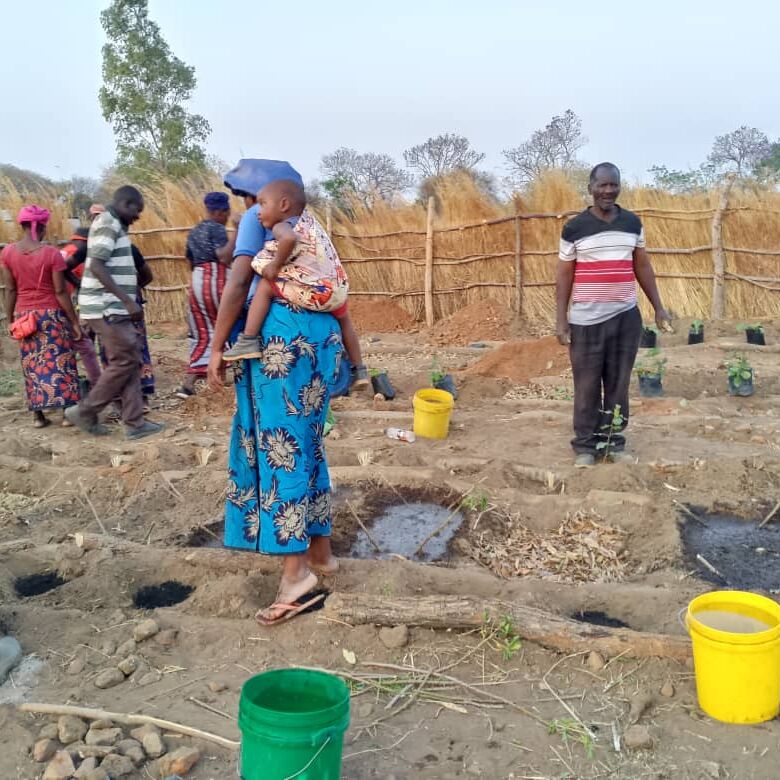
KUTH is located in Chief Chamuka area in Zambia Central Province, close to the Chipembi mission. It is a rural region where most families live on what their fields produce. And that is getting harder year by year. The forests are disappearing, the soils are losing their strength, and clean water is scarce.
Zambia loses around 250,000 to 300,000 hectares of forest every year, mainly through charcoal production and farming that takes more from the soil than it gives back. People here feel the consequences directly: erratic rain, droughts, failed harvests. When the harvest fails, the income fails too, and often the school money with it.
Women and girls are hit hardest. Where water and washrooms are missing, adolescent girls miss two to three school days every month. From its own tree nursery and two new wells through to training in sustainable agriculture, KUTH brings reforestation, water and knowledge together into a model that lasts. We put particular effort into supporting women and mothers, because where they get ahead, the whole community grows with them.
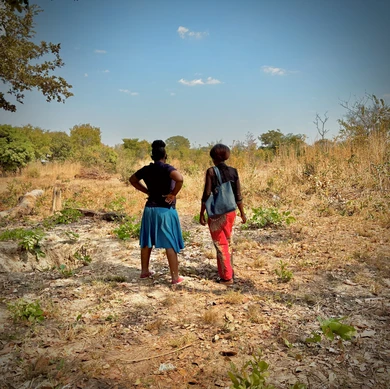
KUTH stands for Kuntendekelo Training Hub. On the ground, the project is run by our partner organisation Kuntendekelo Training Foundation (KTF), an organisation registered in Zambia. It was founded by Deaconess Mable Sichali, who has worked for years in environmental education, sustainable agriculture and community work.
Instead of short-term aid, knowledge is created that stays. Participants become trainers, savings groups become strong communities. Over time, tree nurseries, wells and groups carry themselves. Protecting natural resources and strengthening women go hand in hand here.
What KUTH does
- Reforestation and its own tree nurseries to bring the forests back
- Sustainable growing methods such as permaculture and agroecology
- Training in climate-resilient farming and additional sources of income
- Close involvement of communities and schools
- Self-help groups that strengthen women economically in particular
As of March 2026
Q1 of 4 January to March: the foundation
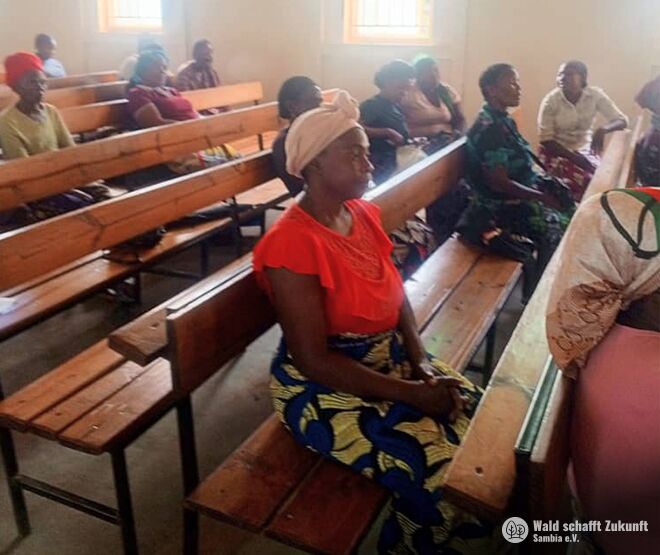
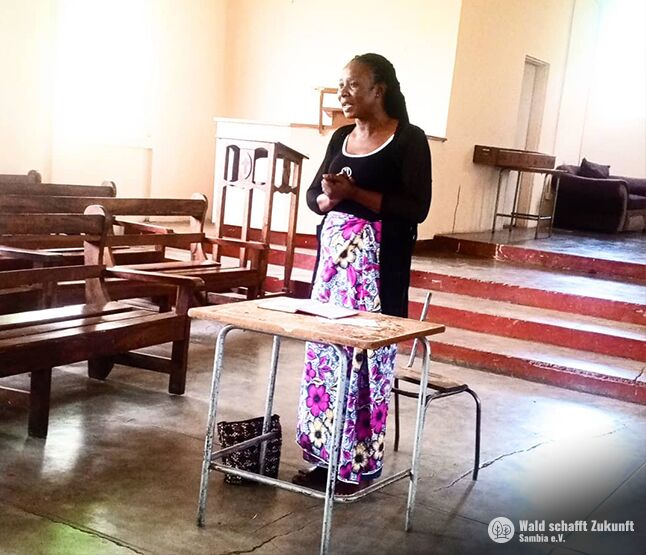
Our KUTH project in southern Zambia (Chisamba District) has been running for three months. In this first phase the key groundwork was laid in terms of staff, organisation and expertise, so that reforestation, education and income-generating measures can have a lasting effect. That is an important step towards not just starting the project, but running it in a way that holds up over time.
The most important milestones of this early phase include:
- Building a local core team for the operational and technical project work
- official backing for the project from Chief Chamuka
- start of community mobilisation on the ground
- procurement of more than 12,000 planting bags
- purchase of over 20,000 seeds of various indigenous tree species
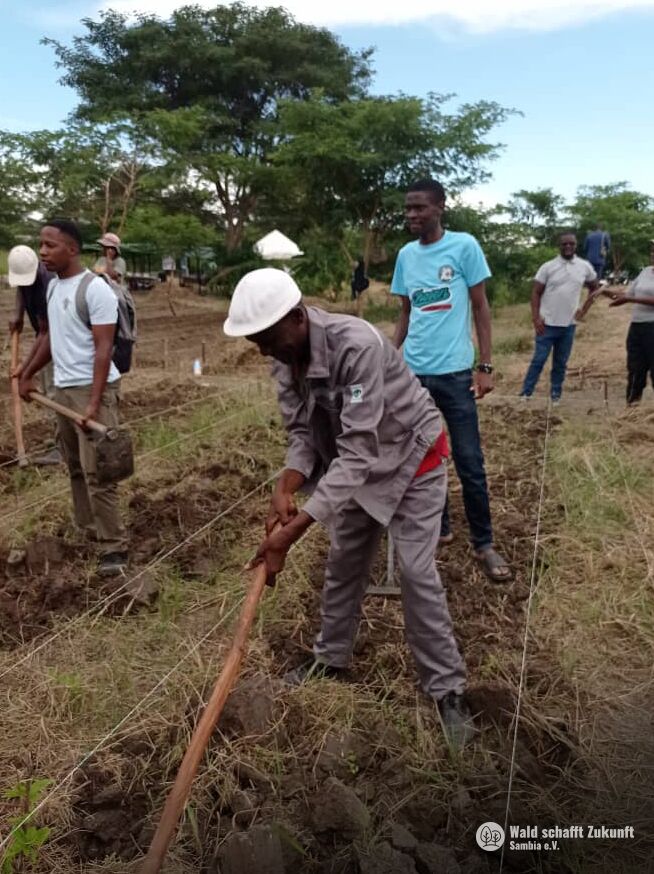
- first training courses in permaculture, agroecology and mushroom production
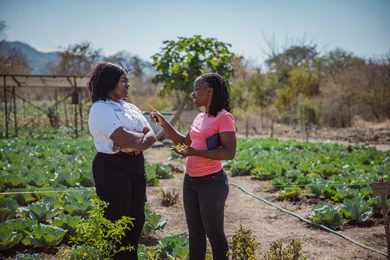
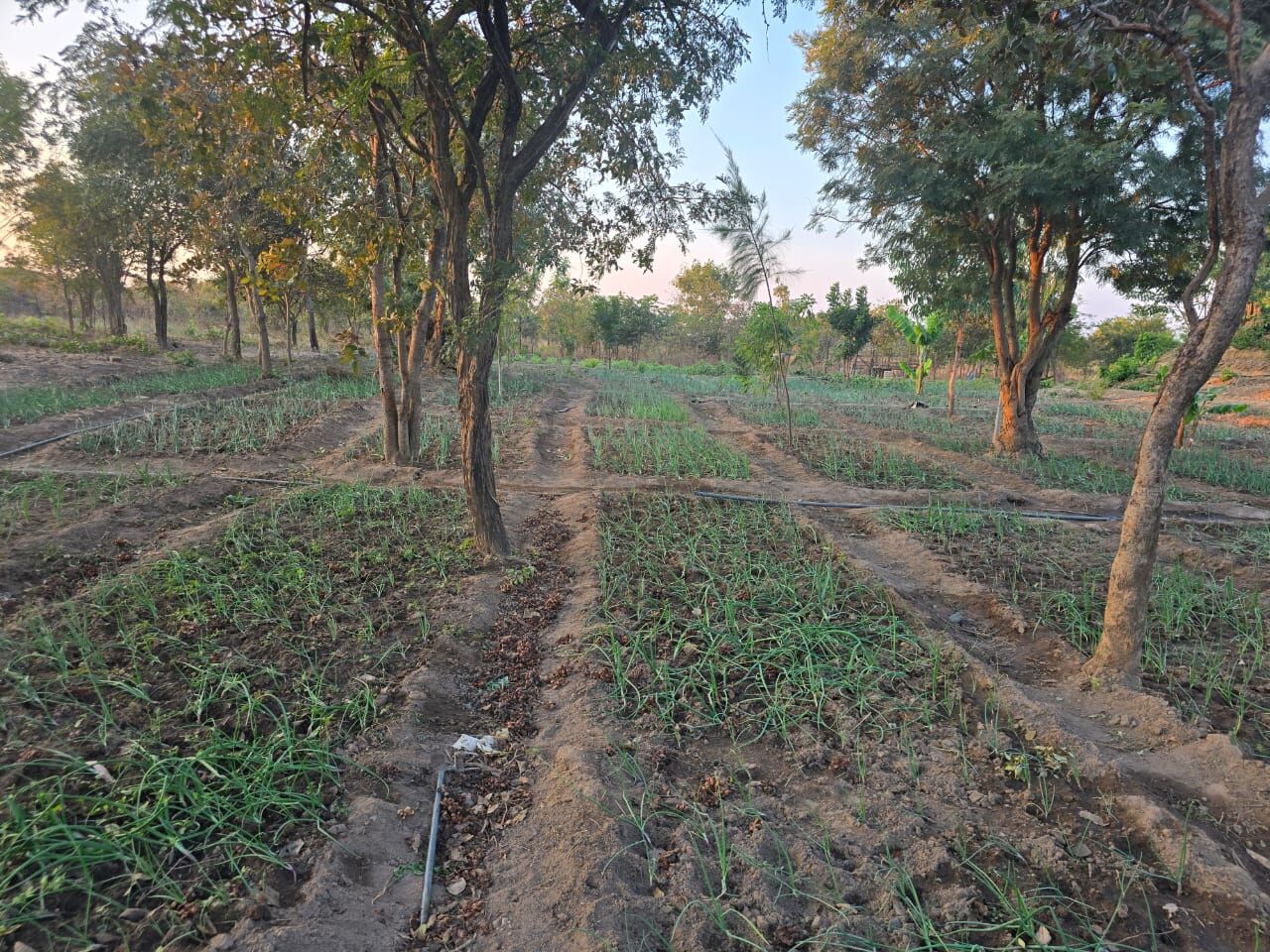
- setting up a short-cycle production unit with vegetables such as onions, okra, cabbage and aubergines
What matters most to us is the holistic approach of the project. It is not only about planting trees. It is about building knowledge, strengthening local structures and creating prospects together that will last.
Alongside the reforestation work, a production unit has therefore already been set up to contribute to the project self-sufficiency. At the same time, first talks were held with women groups and other local actors. The response on the ground is positive and shows how important it is to combine ecological measures with education, participation and practical income prospects.
After this successful start, attention now turns to the next phase: further work in the tree nursery, deepening the cooperation with the communities, and preparing to plant 25,000 trees in the first project year.
As of June 2026
Q2 of 4, April to June: from setting up to delivering
- Expansion into three new villages: Sichilongo, Mwamulando and Suze, plus a baseline survey in six communities
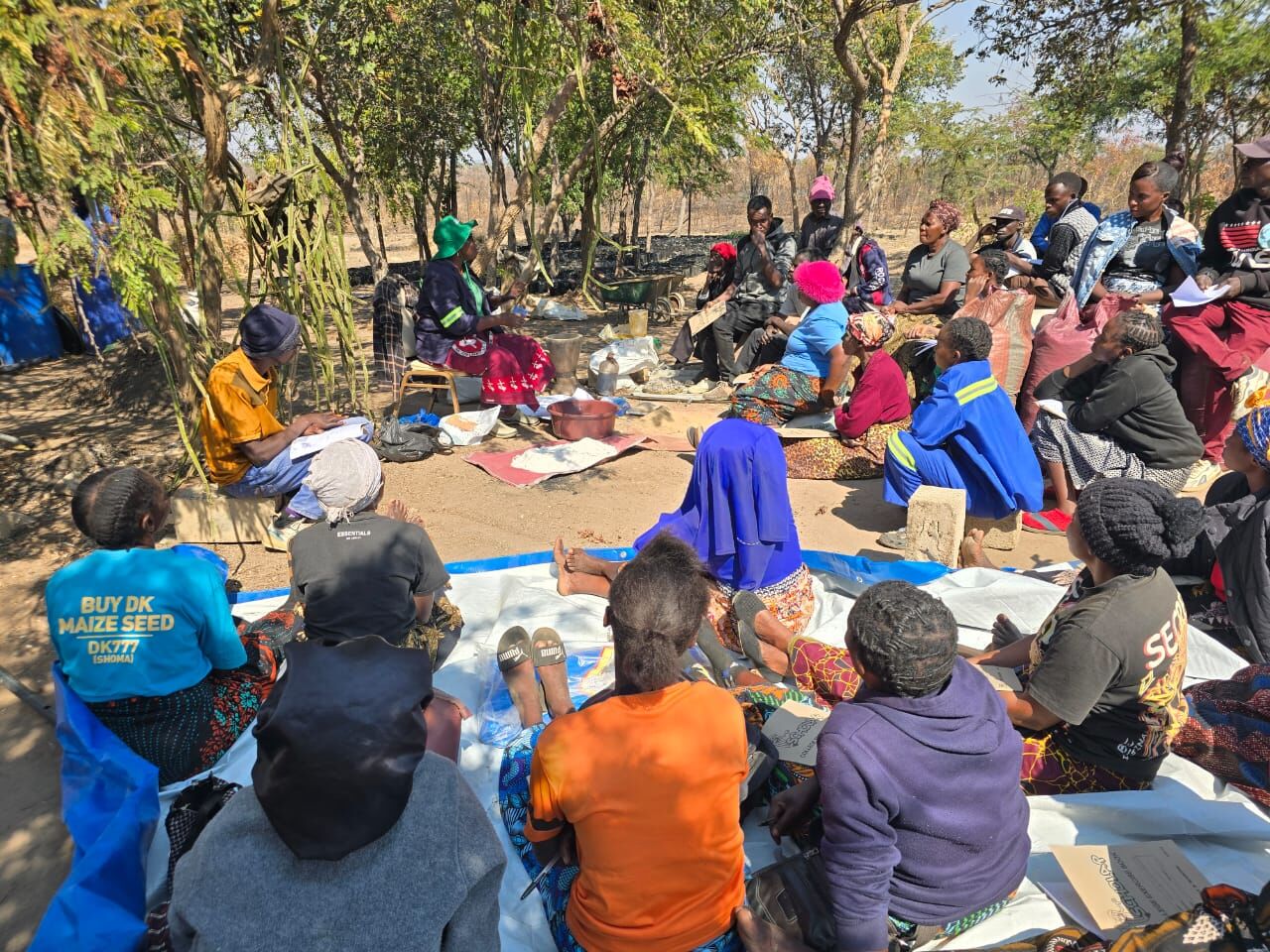
- 45 people trained in agroecology (25 women, 20 men, 8 of them young people)
- 3,000 trees of various species planted during the practical training
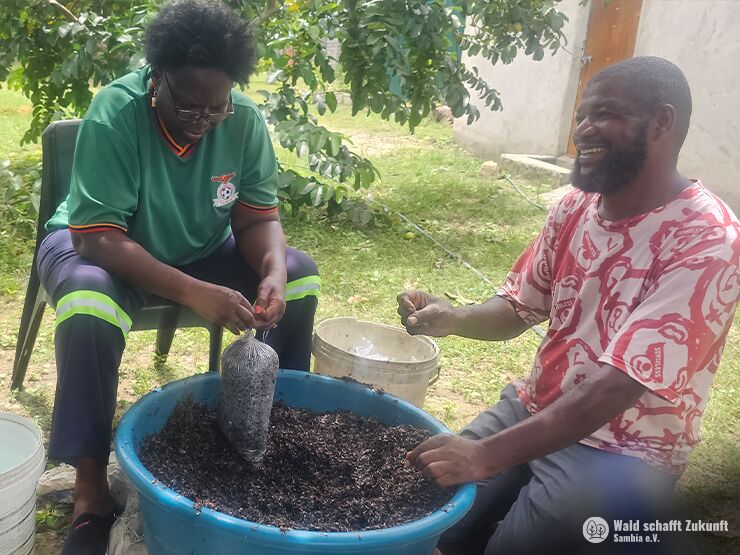
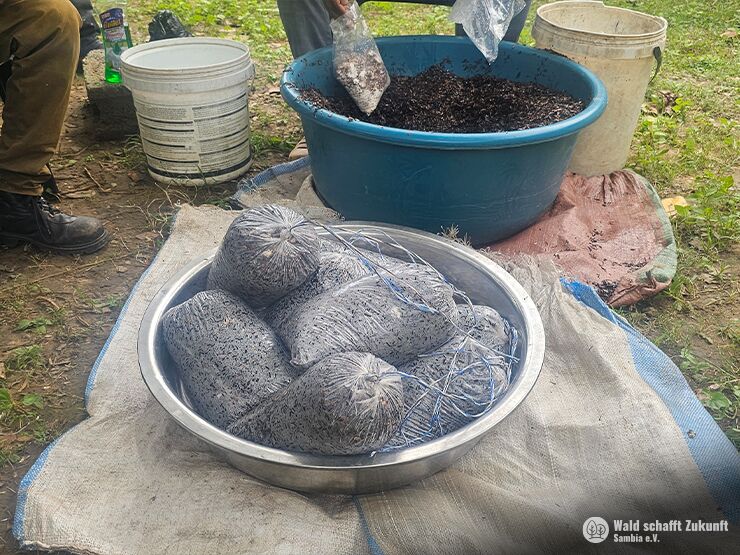
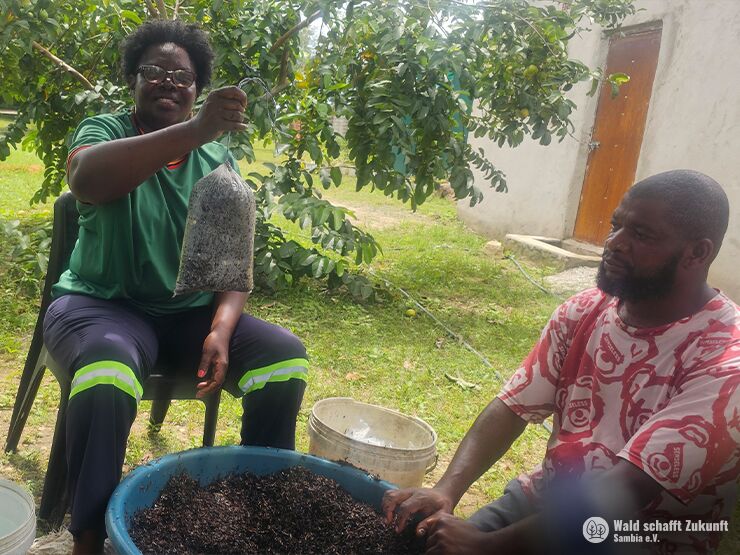
- In-house production of organic biochar, liquid organic fertiliser and bokashi
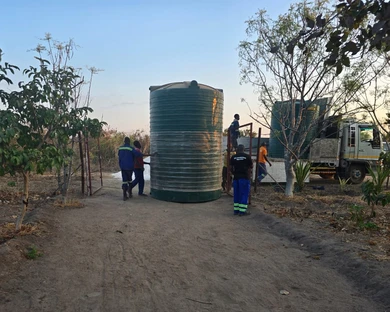
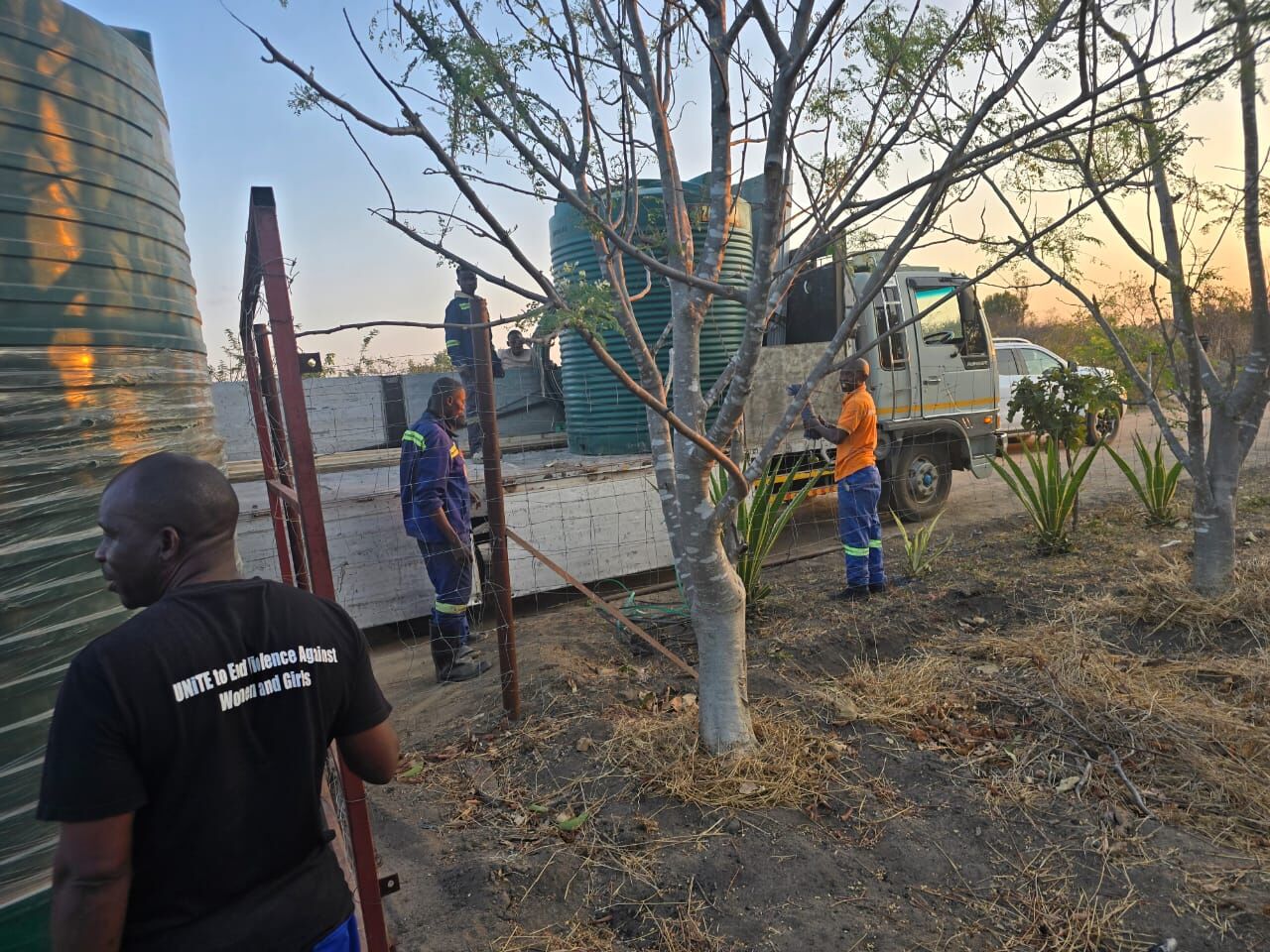
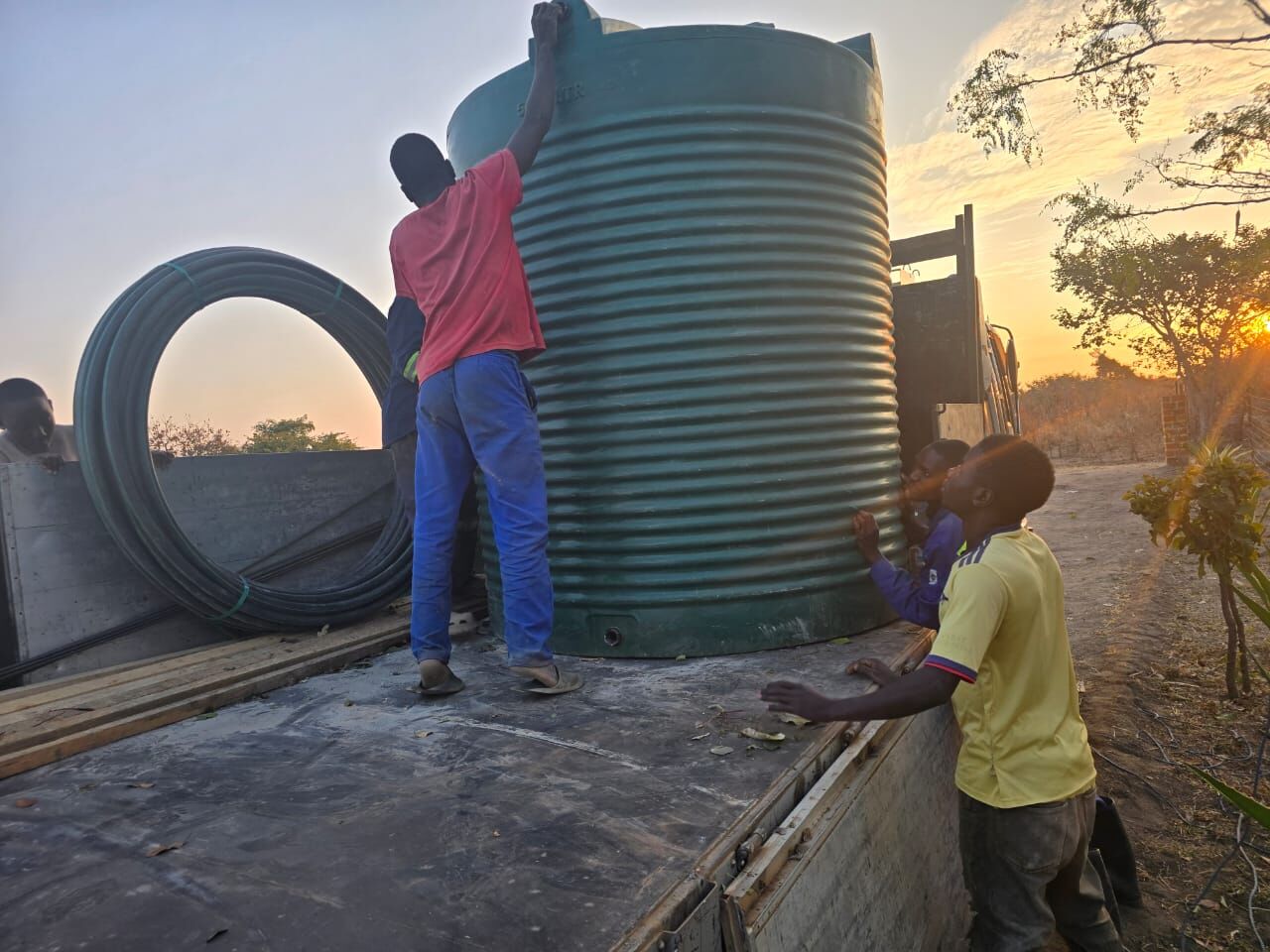
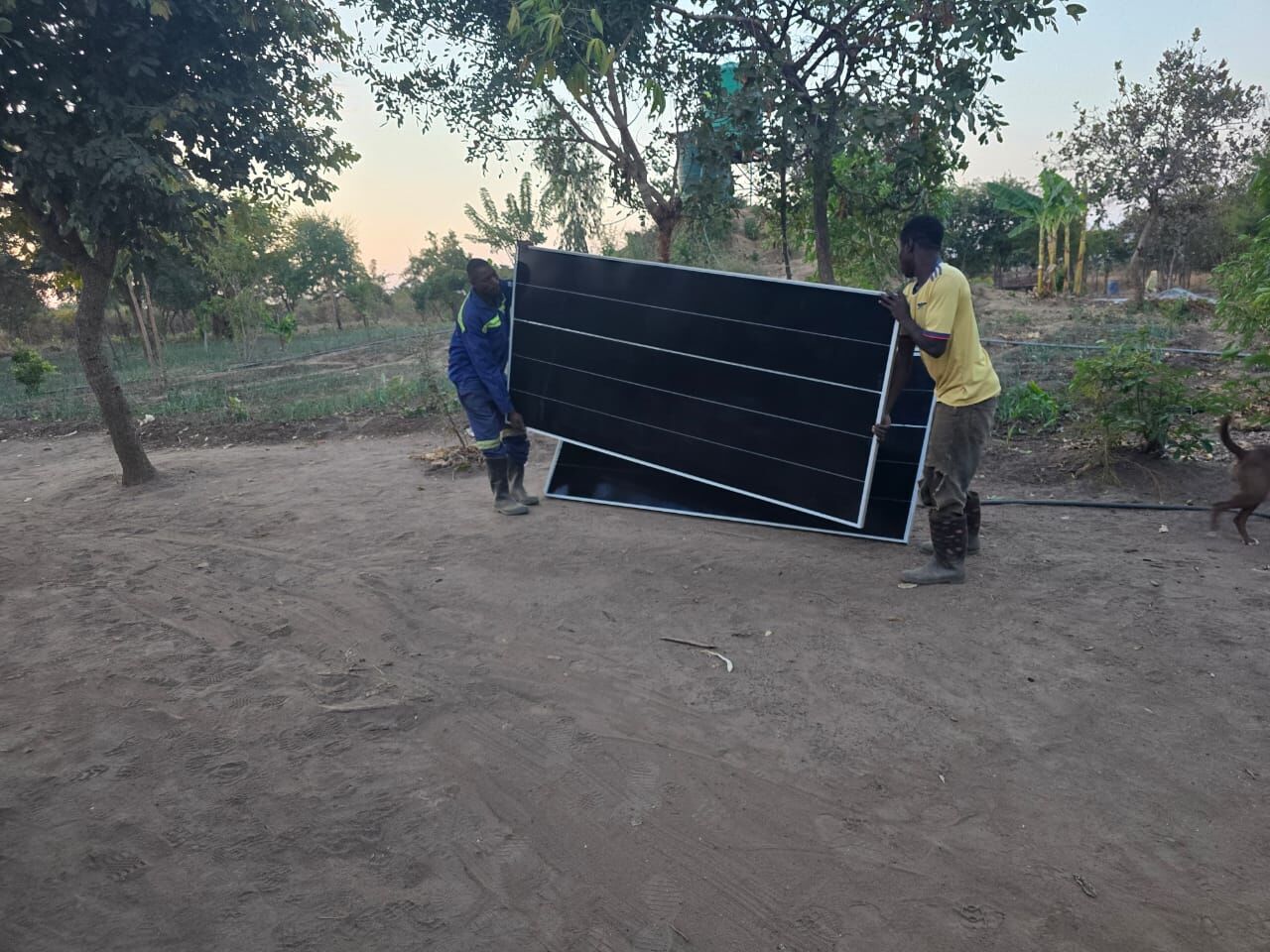
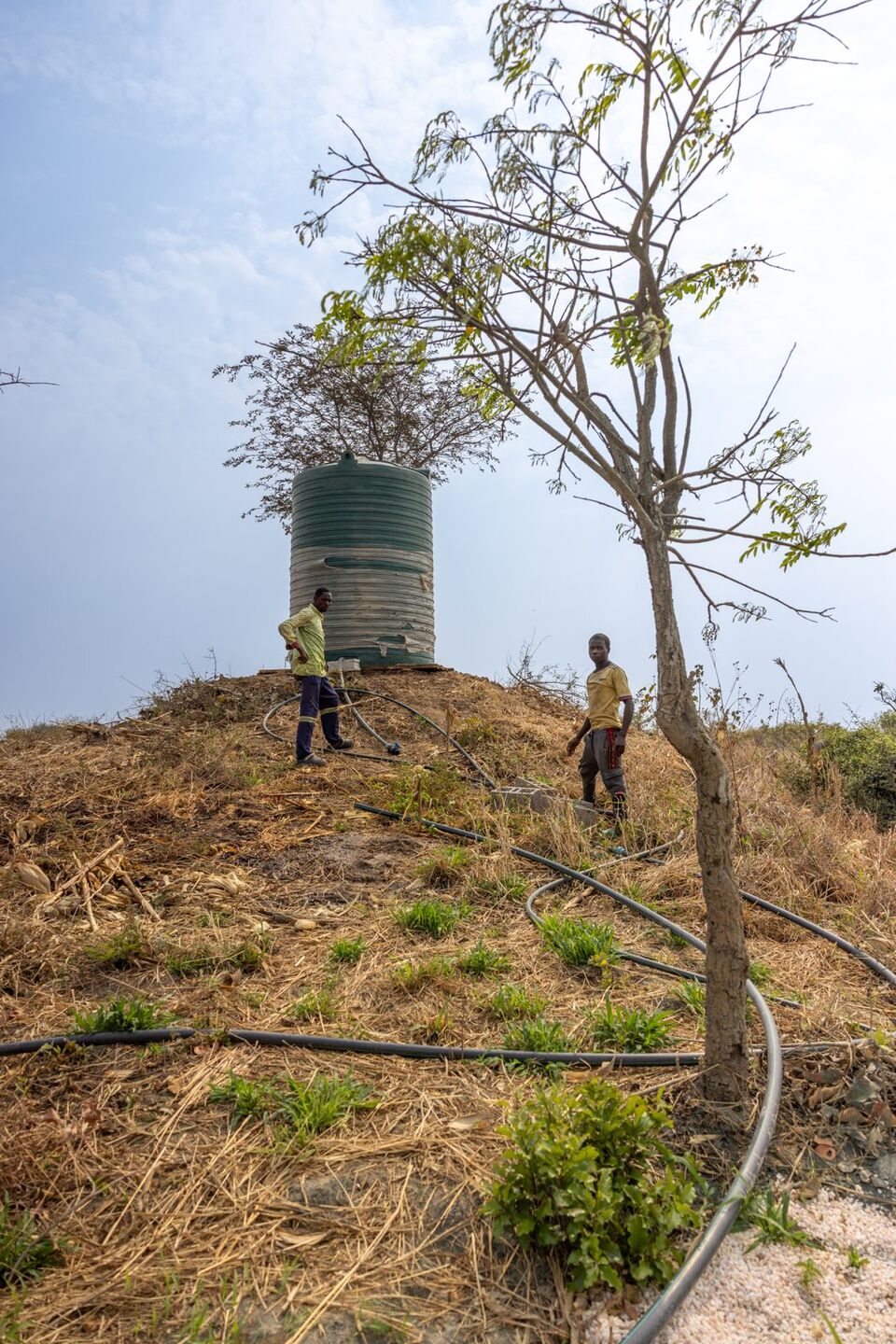
- Two fully working boreholes, each 100 metres deep, with solar pumps, two water tanks (10,000 and 5,000 litres) and solar panels
- 150 bundles of thatching grass procured for the planned eco training shelter
From the field: two wells where one was planned
The first drilling attempt hit solid rock at 70 metres and stayed dry. Instead of giving up, the team drilled on to 100 metres and struck plenty of groundwater. With the rig already set up, a second well was sunk straight away. Today there are two wells where one was planned, and all within budget.
Training the community
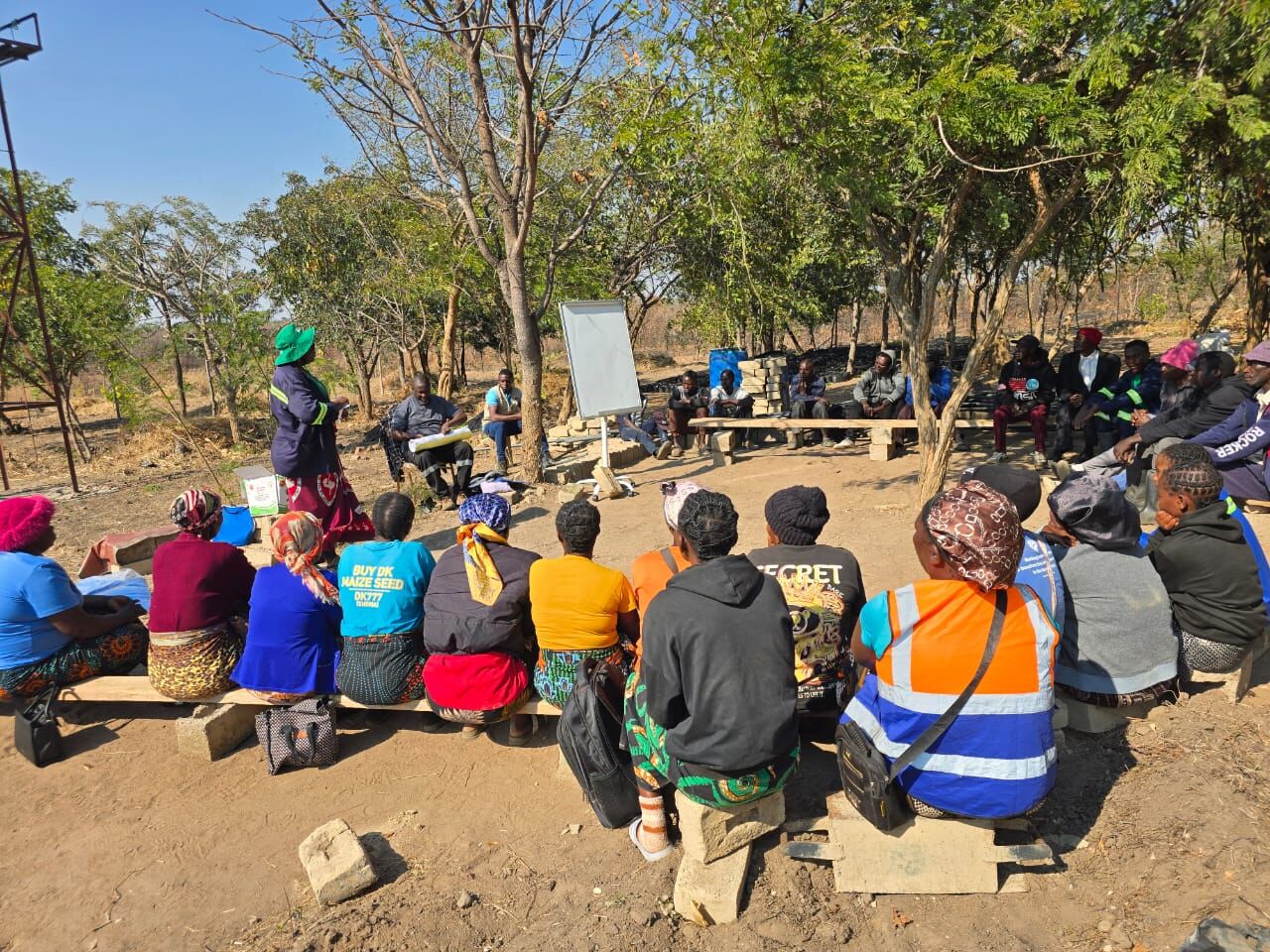
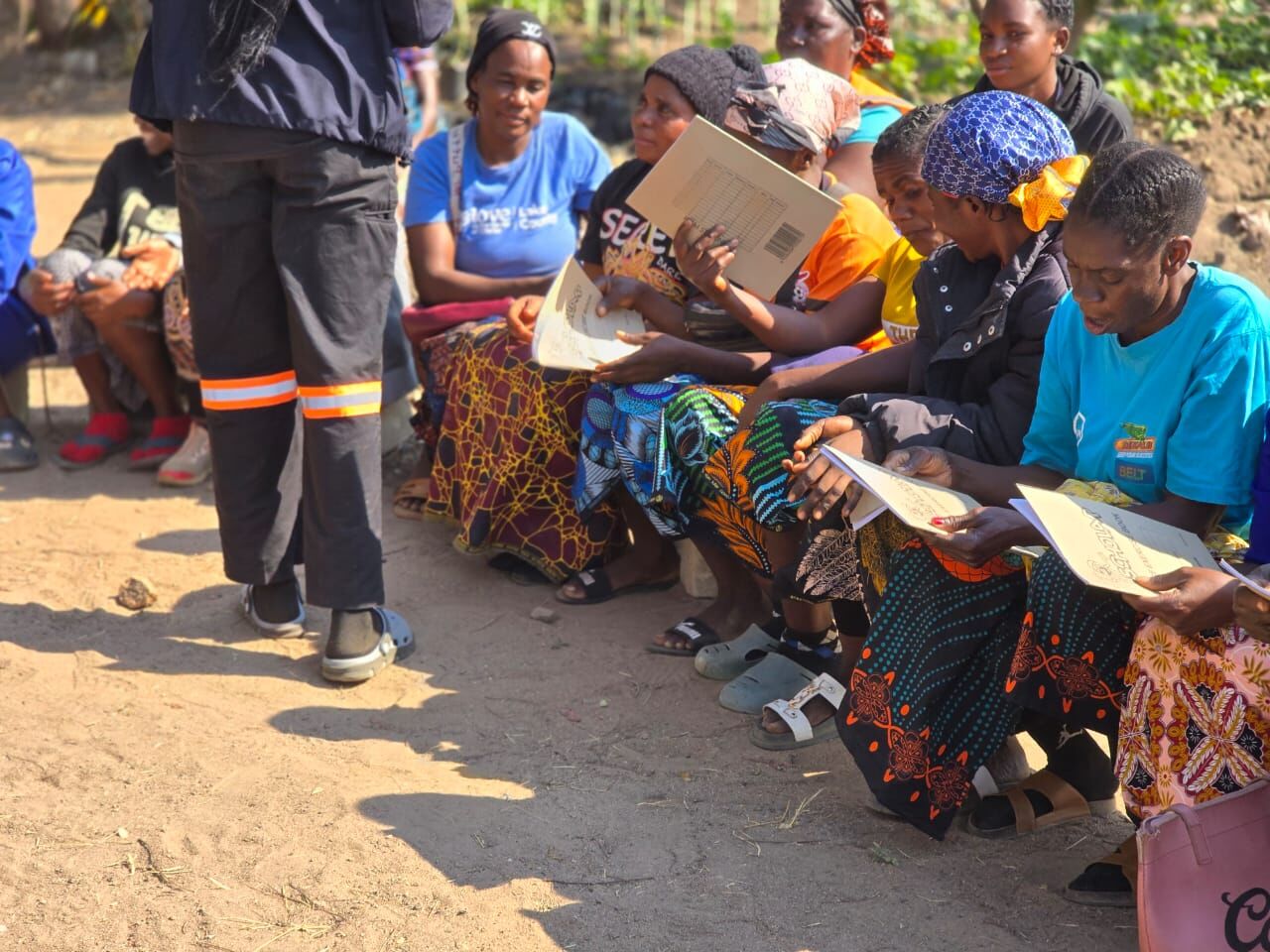
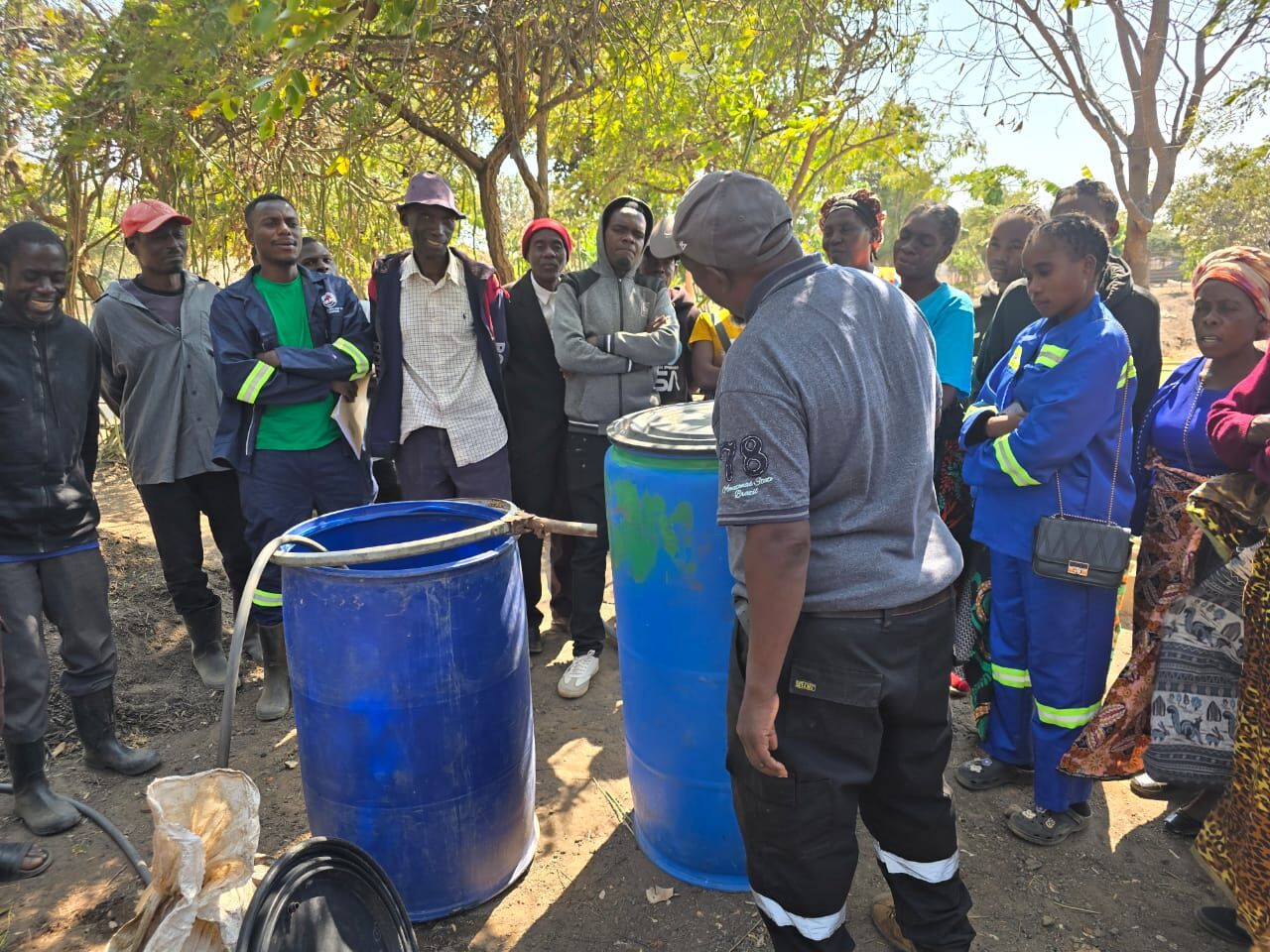
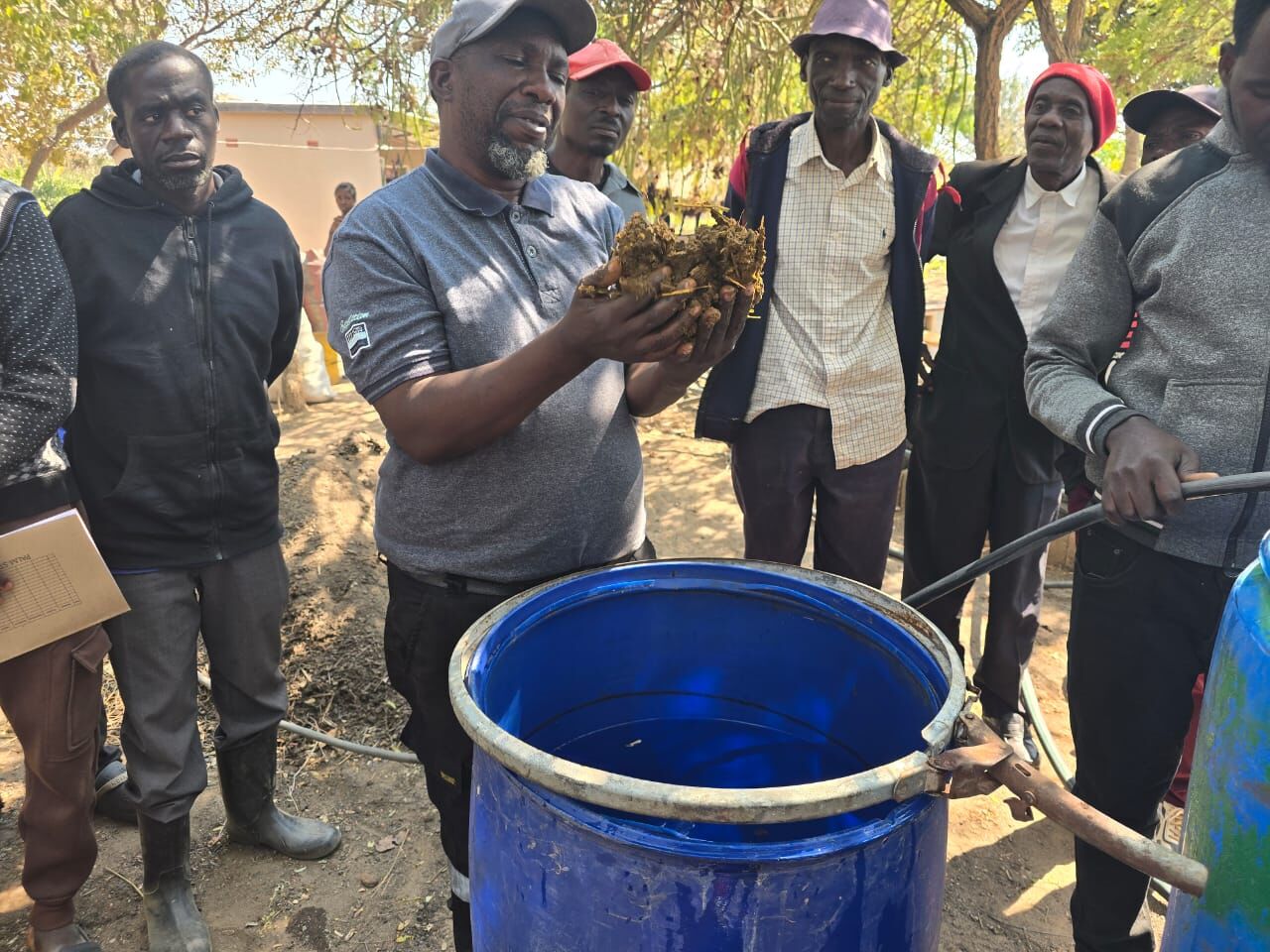
Making biochar
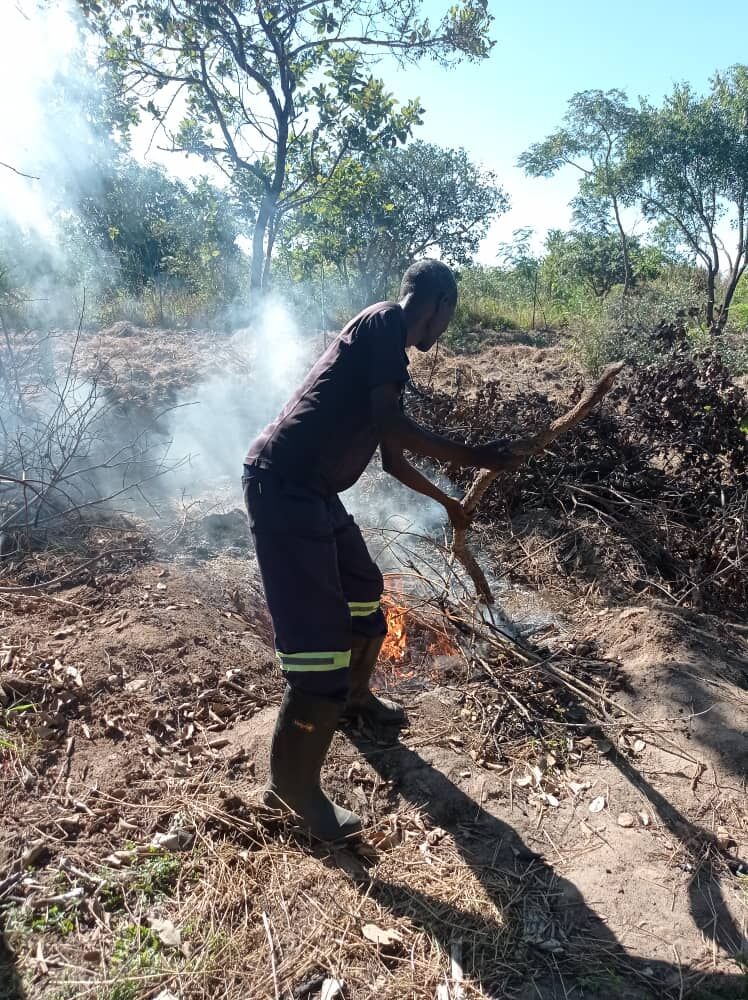
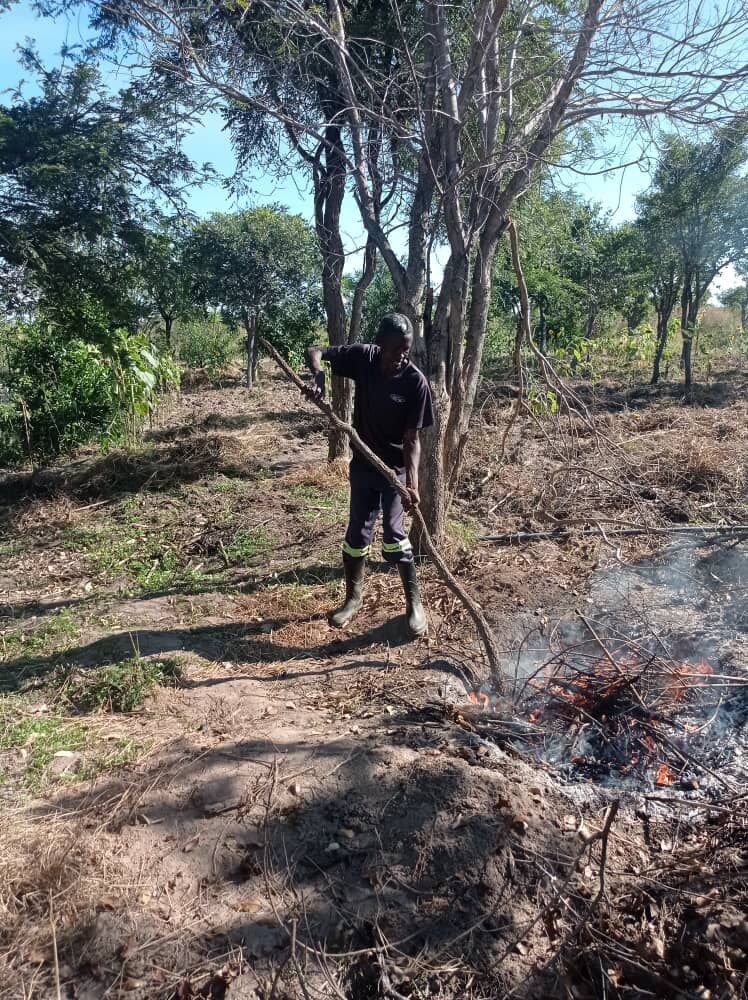
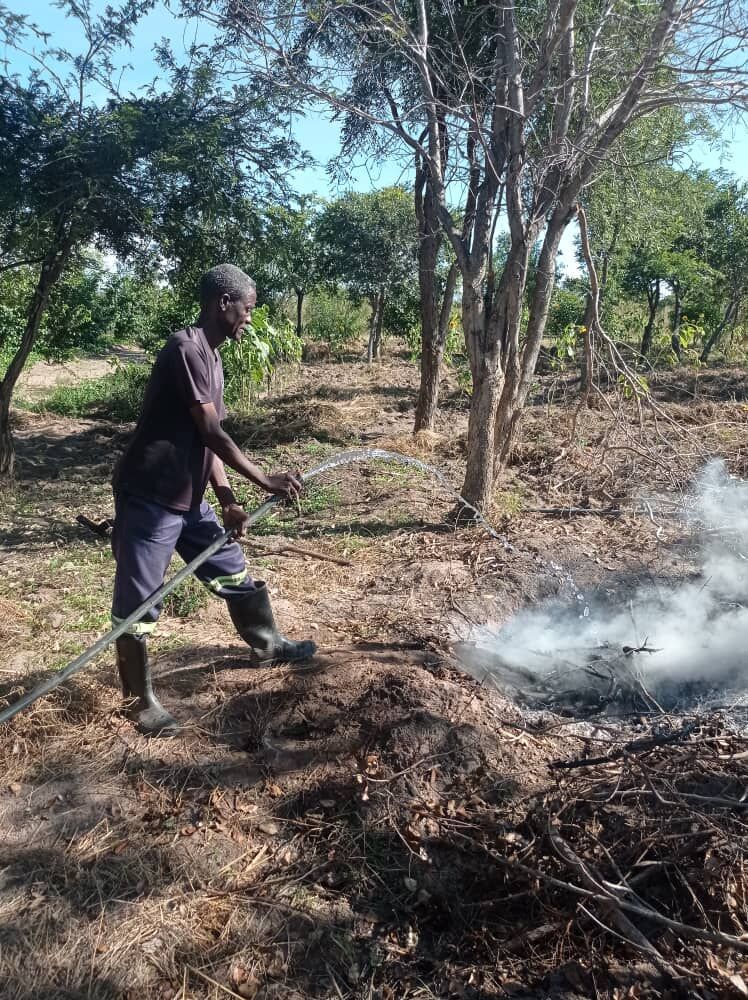
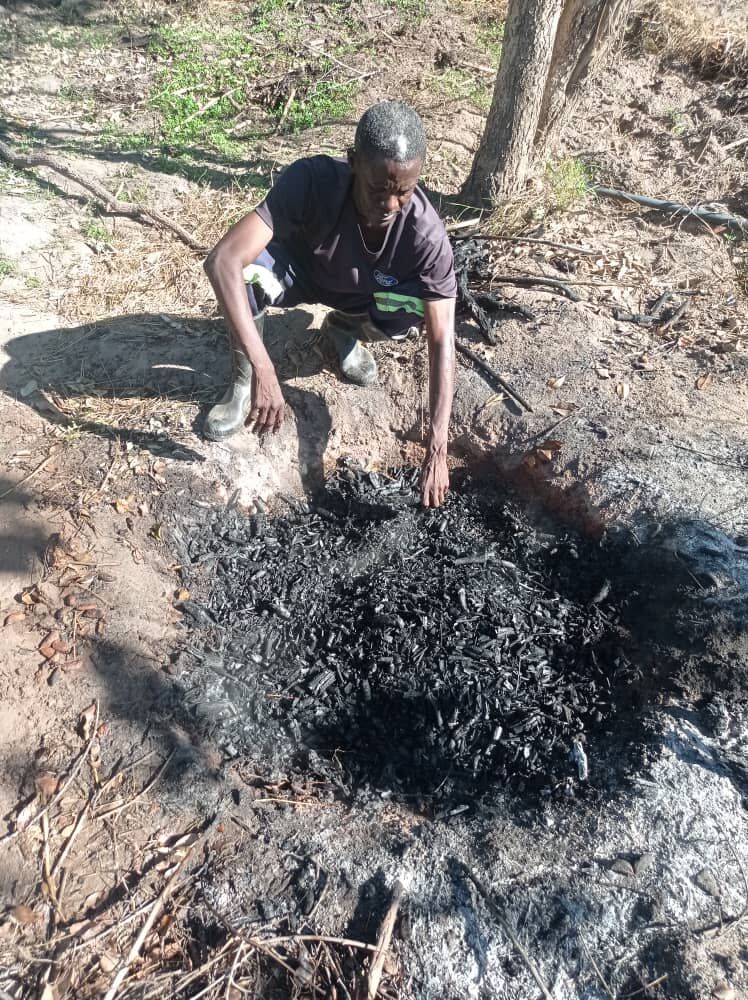
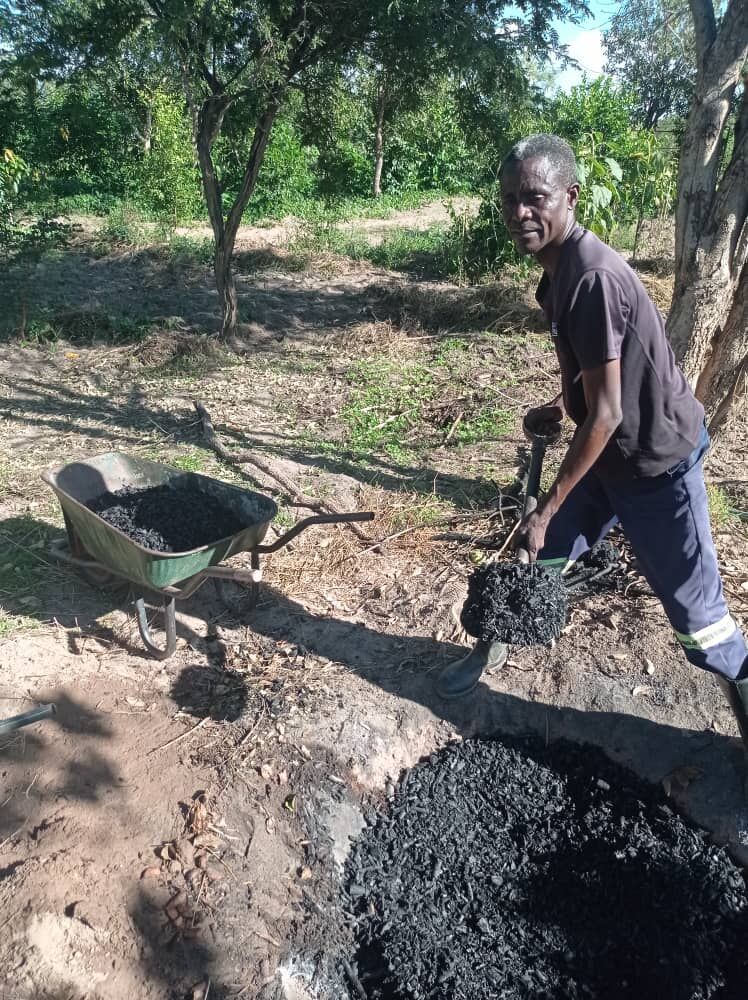
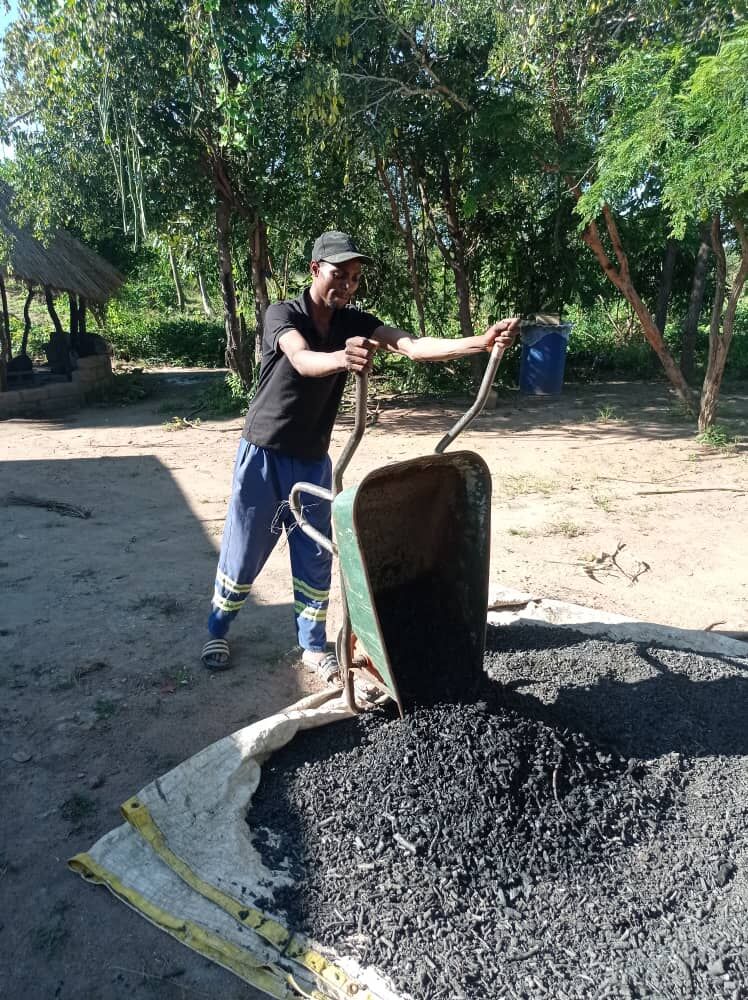
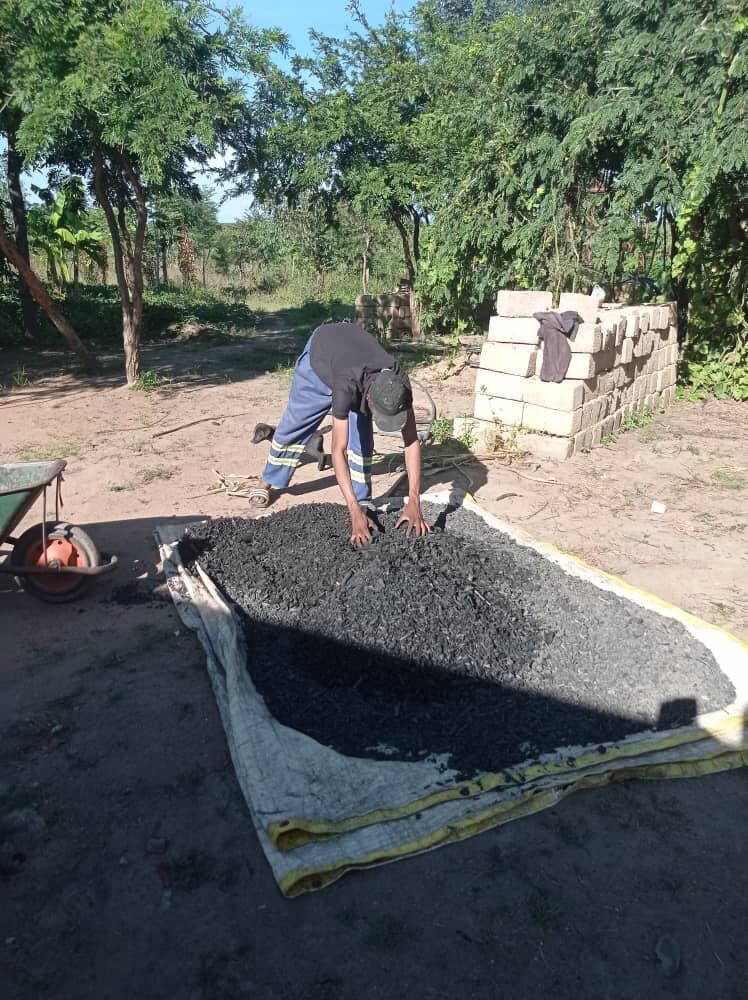
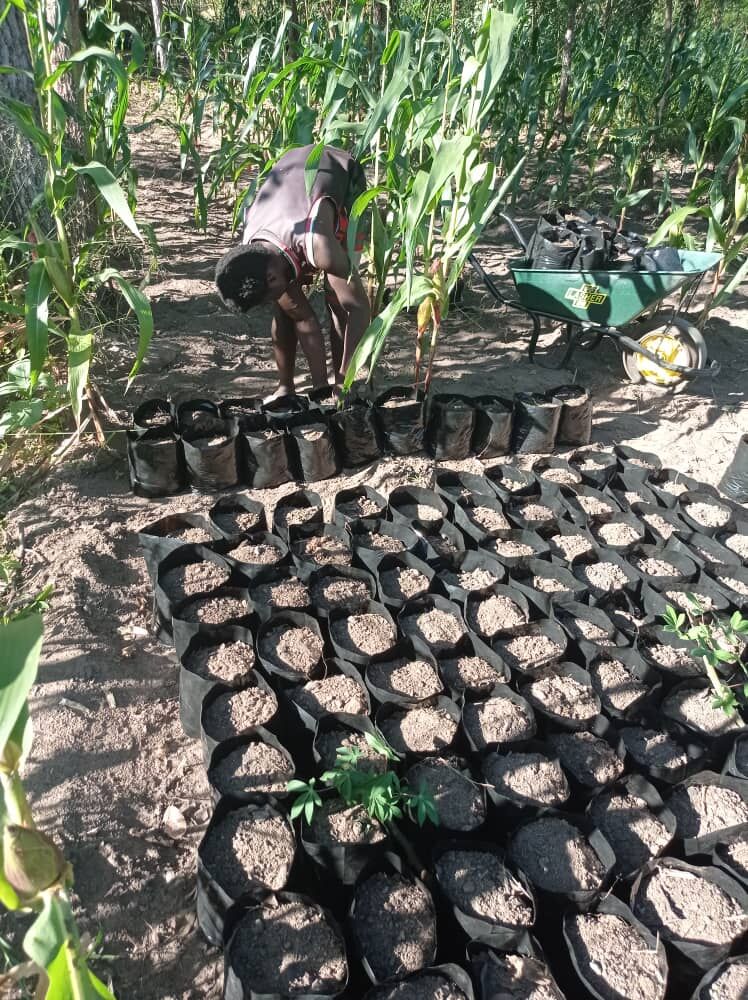
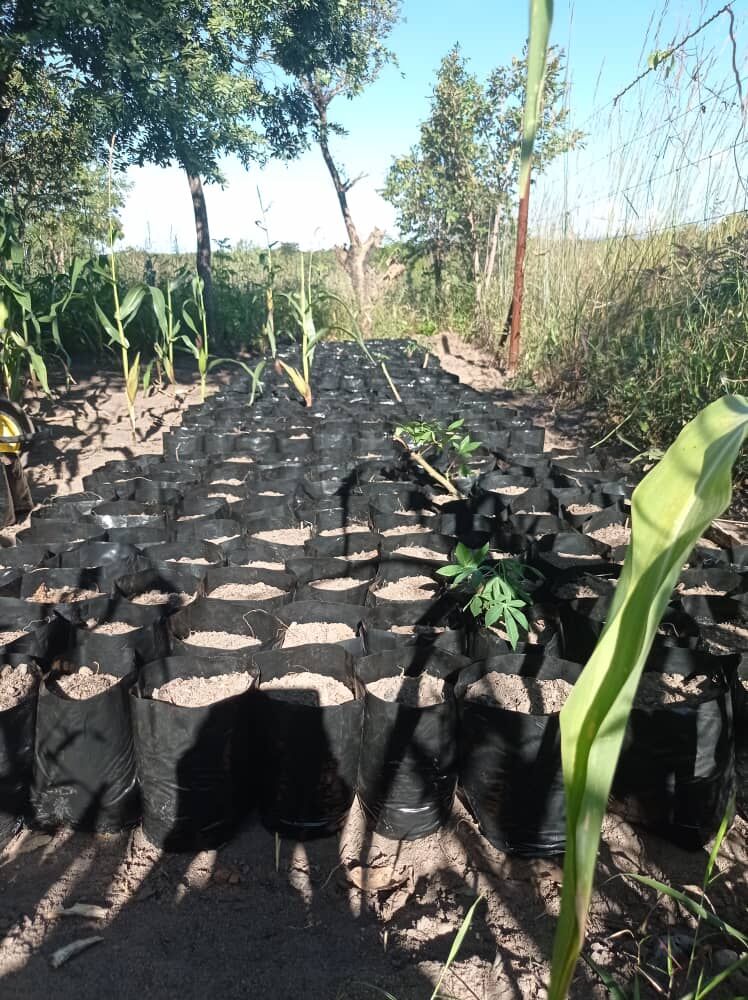
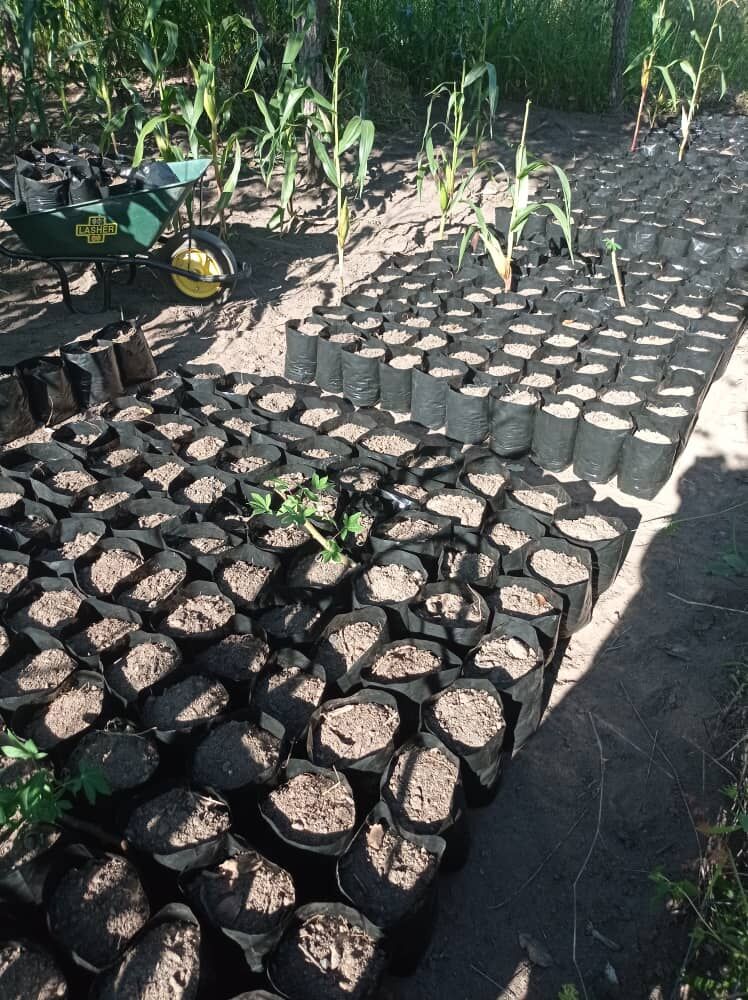
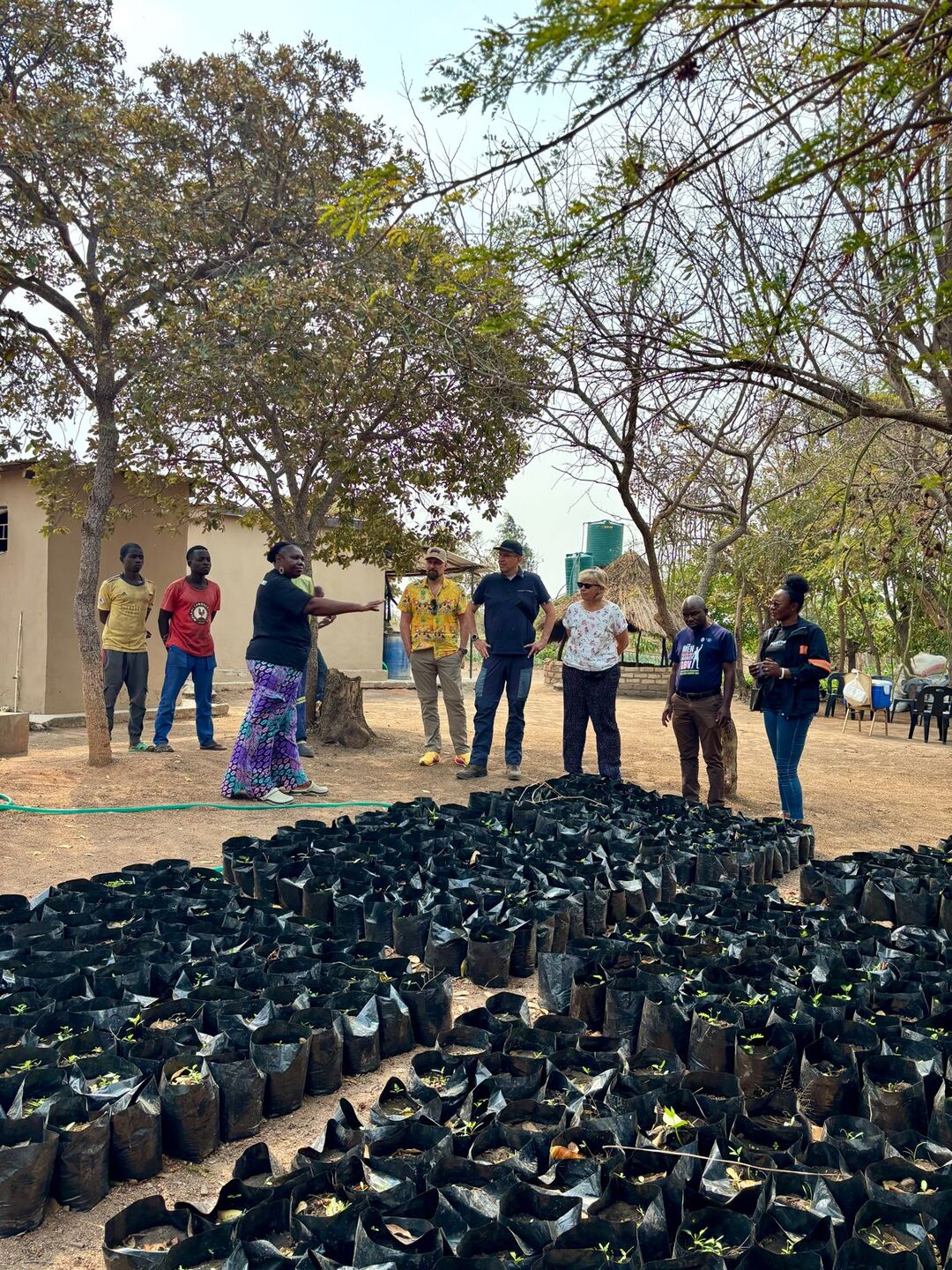
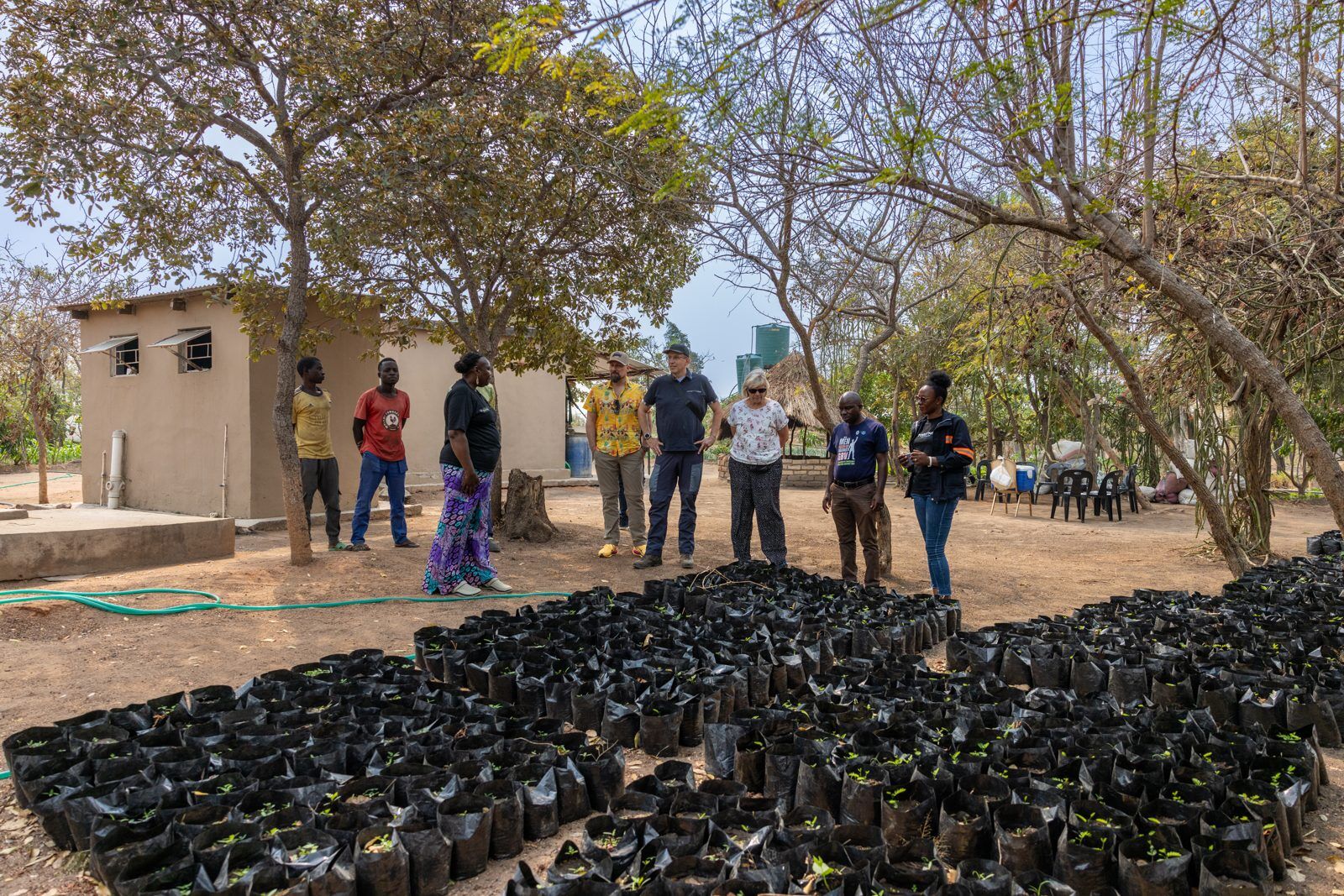
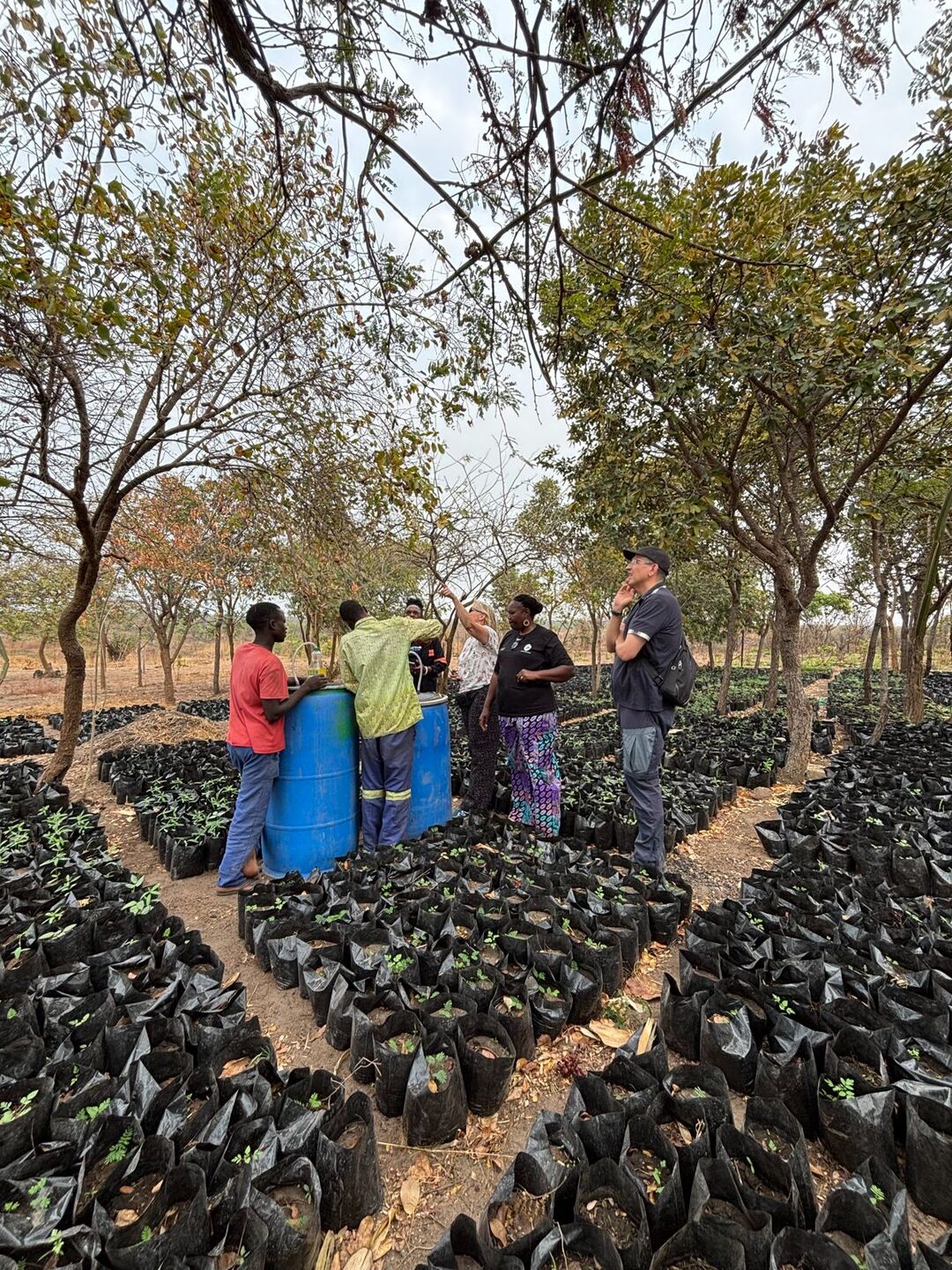
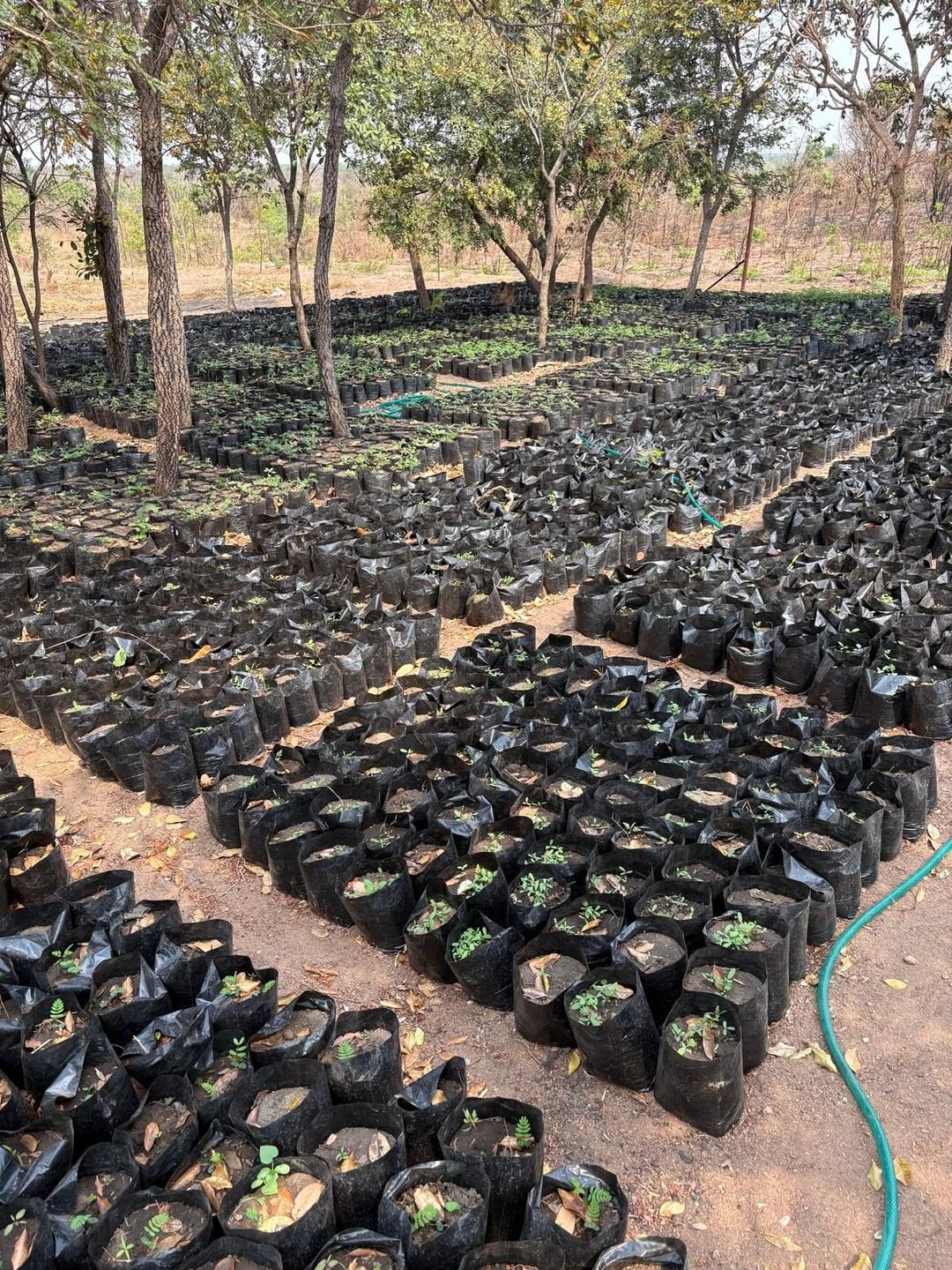
Impressions from the tree nursery
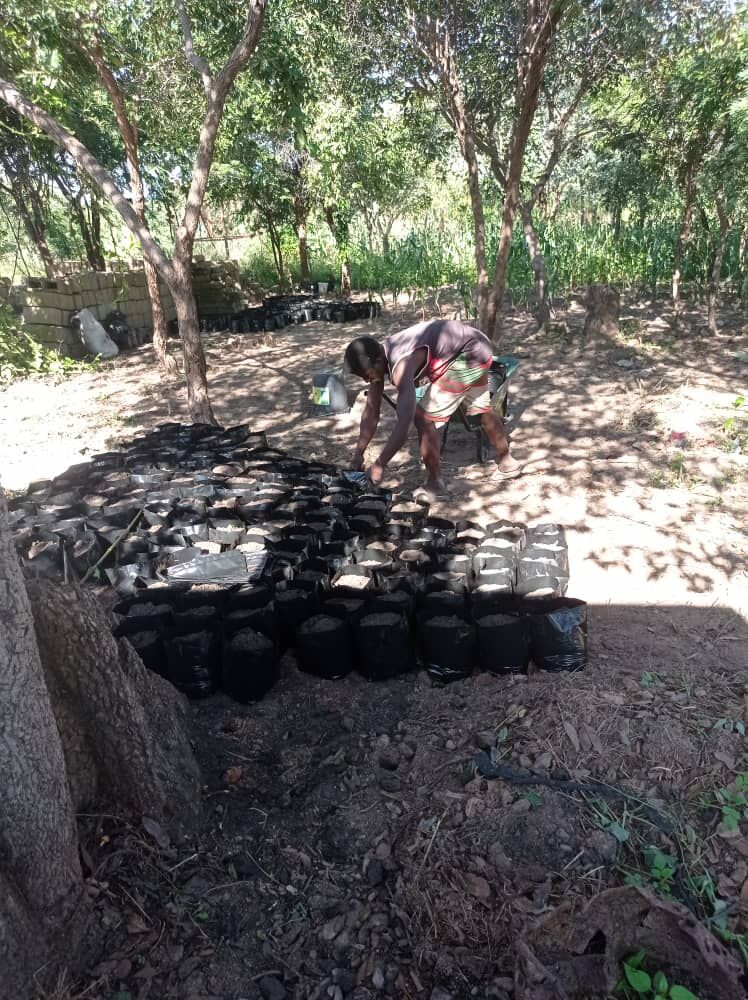
Stand: Juni 2026
Q3 of 4, July to September: the tree nursery grows to 12,000 seedlings
With our support, the Kuntendekelo Training Foundation team quadrupled the tree nursery in the third quarter. The site has also moved a good deal closer to what it is meant to become, a place where smallholder farmers can see regenerative agriculture in everyday practice and try it out for themselves.
- 9,000 new seedlings, bringing the nursery to 12,000 young trees with a germination rate of 90 per cent, including Musangu (Faidherbia albida), Gliricidia, Moringa, Sesbania, Neem and avocado
- Both boreholes now run on solar pumps and supply the site independently of the grid and generators
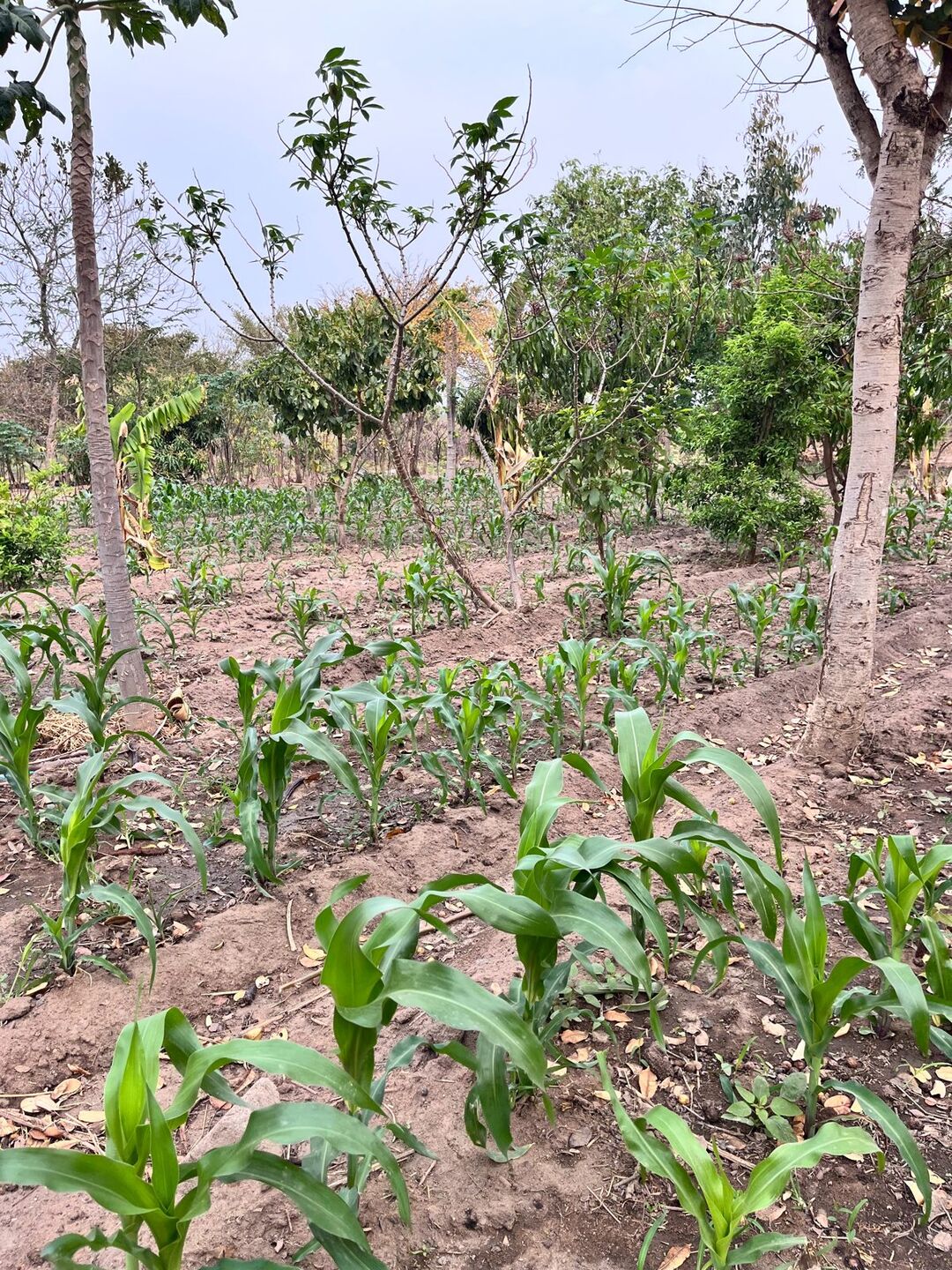
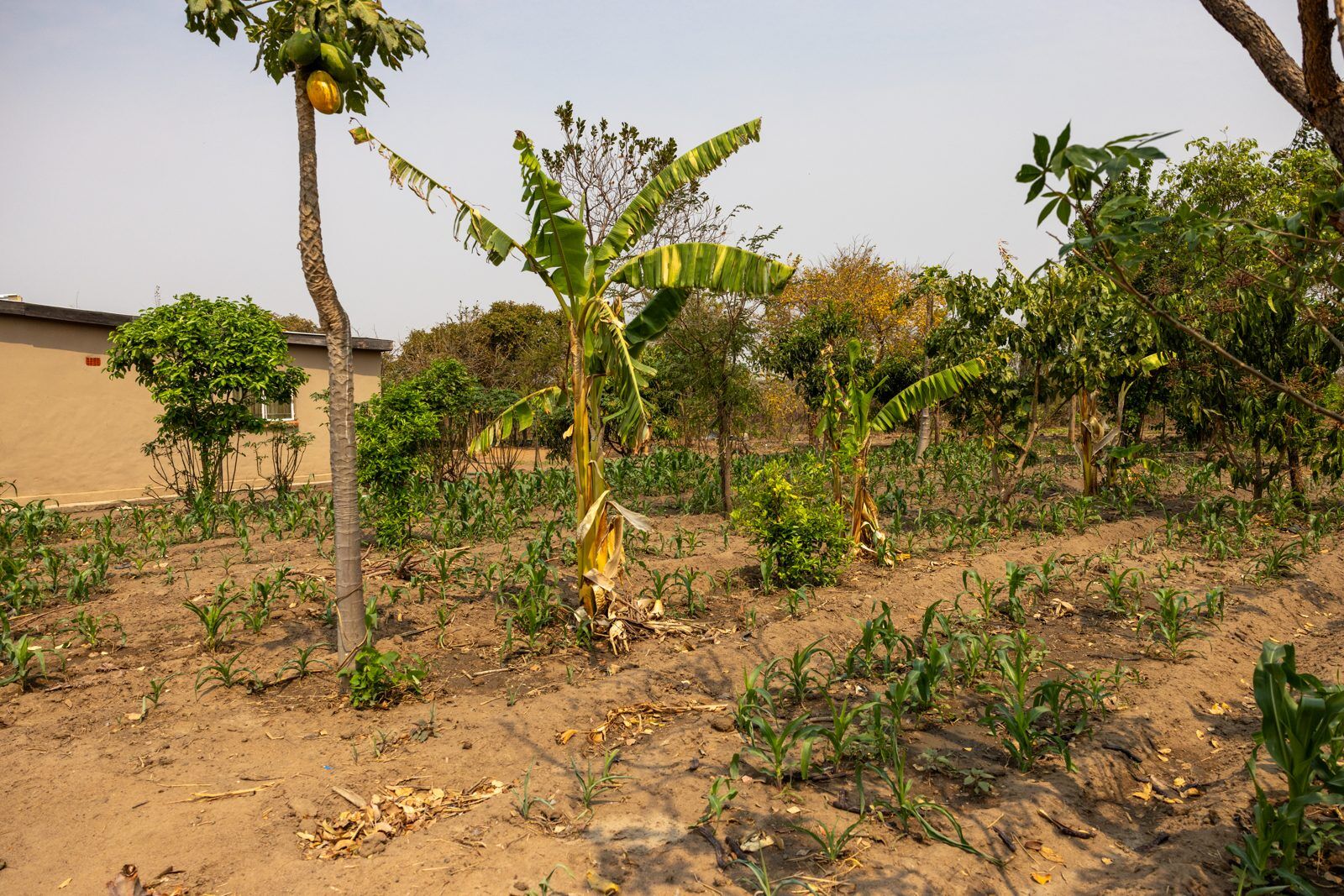
- A 20 by 20 metre maize trial plot shows how home-made liquid fertiliser and biochar can restore exhausted soils
- The first onion harvest is being sold, stored or processed into natural crop protection
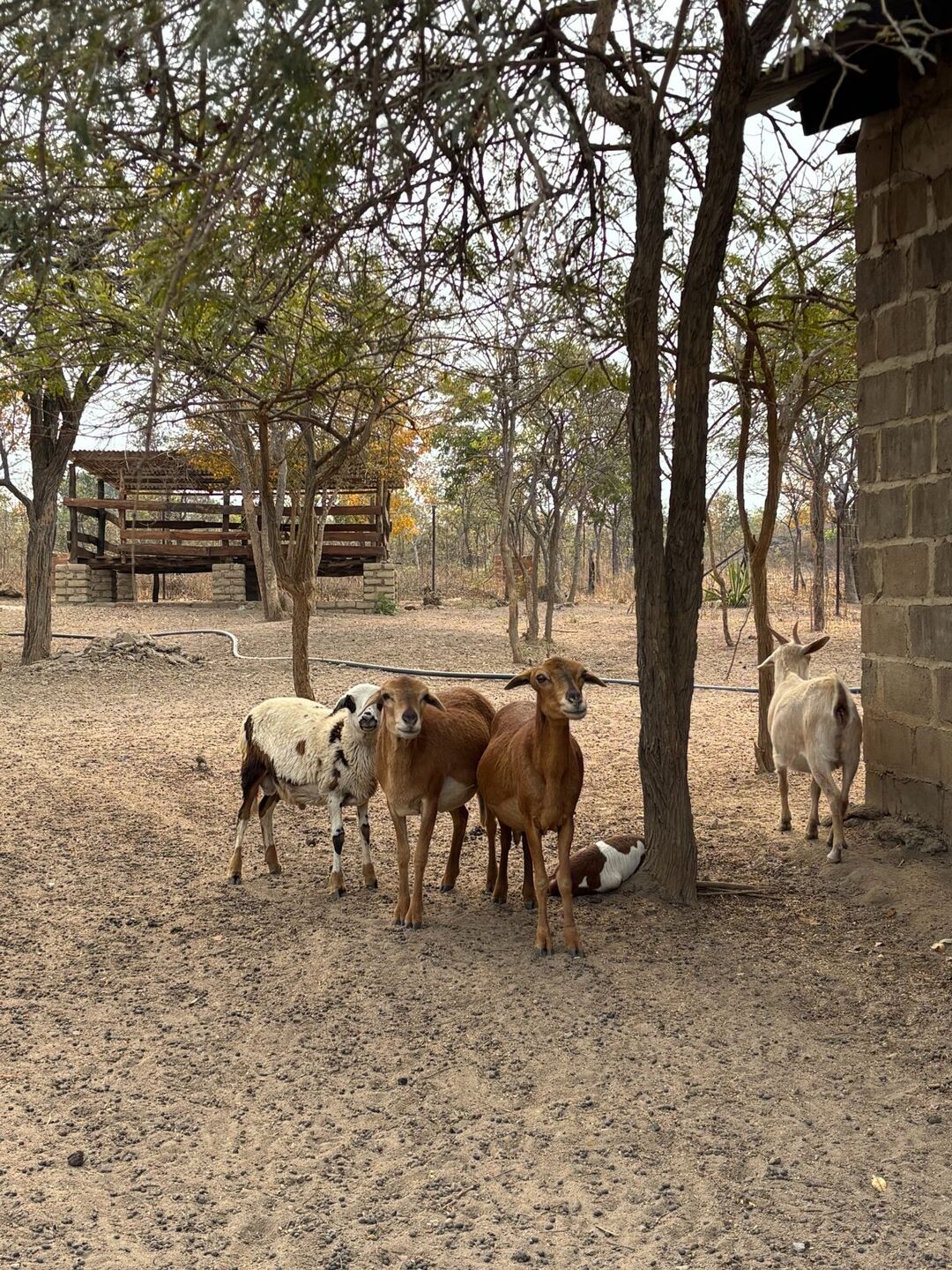
- 15 goats, 4 sheep, 14 chickens and 7 ducks provide manure for compost and soil building
- Local women’s groups have cut 160 bundles of thatching grass for the training shelter
- Planting pits for 100 banana plants have been prepared
It was not an easy quarter. The Zambian kwacha lost considerable value against the euro, so the funds granted in euros were worth less on the ground, while fuel, transport and materials became more expensive. KTF therefore temporarily suspended larger training sessions and focused on the demonstration site, preparing the plantings and smaller meetings in the villages. Follow-up visits showed that many participants are already applying what they learned. What they would most like are refresher sessions on exact mixing ratios, for example for mineral salt licks.
At the end of September, KTF represented the region’s smallholder farmers at the national farmers’ conference of SCOPE Zambia and the Zambia Alliance for Agroecology and Biodiversity. Topics included the right to save and use one’s own seed and a ban on highly hazardous pesticides. DIAKONIA Region Africa-Europe has also reported on the project.
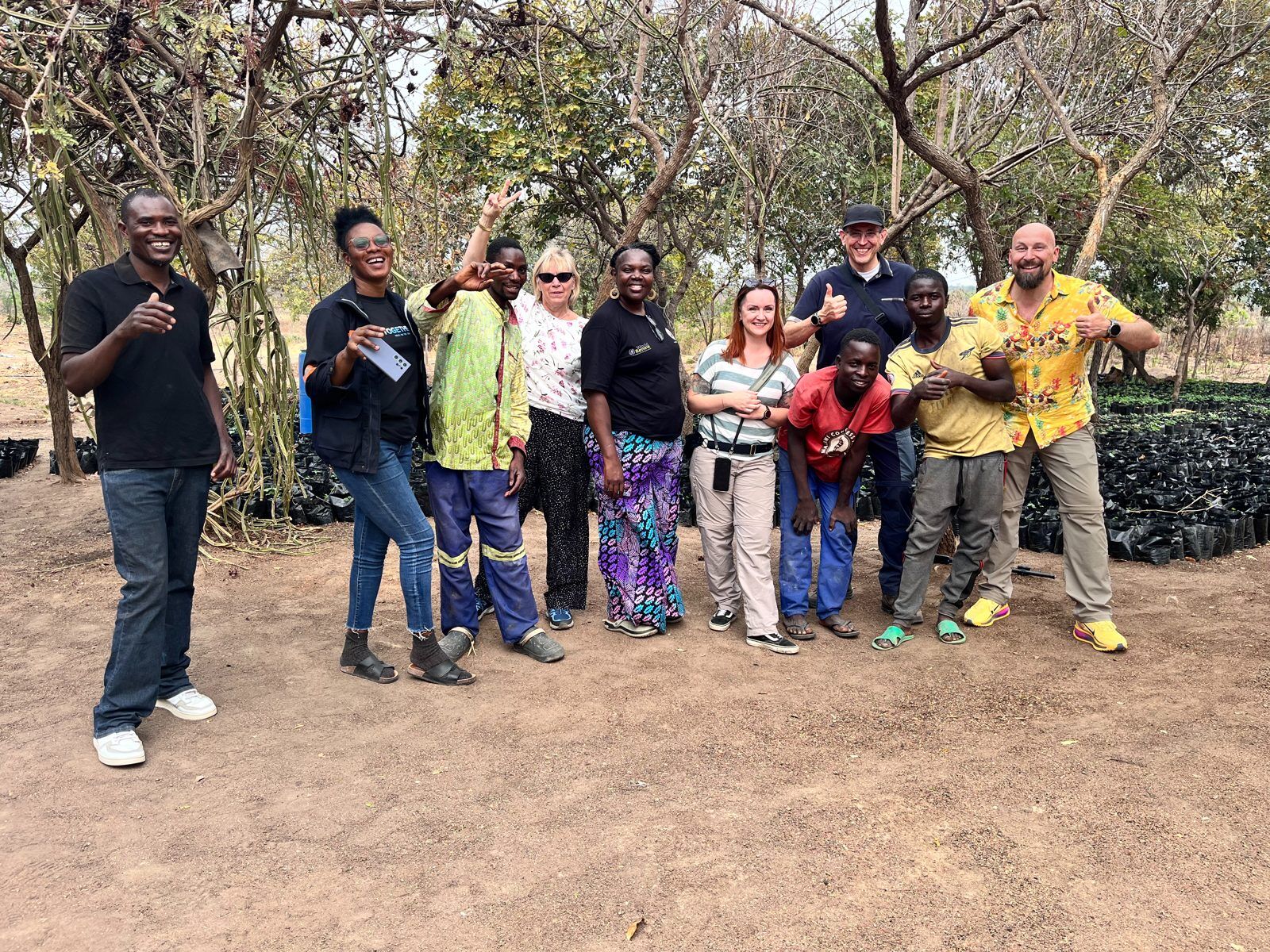
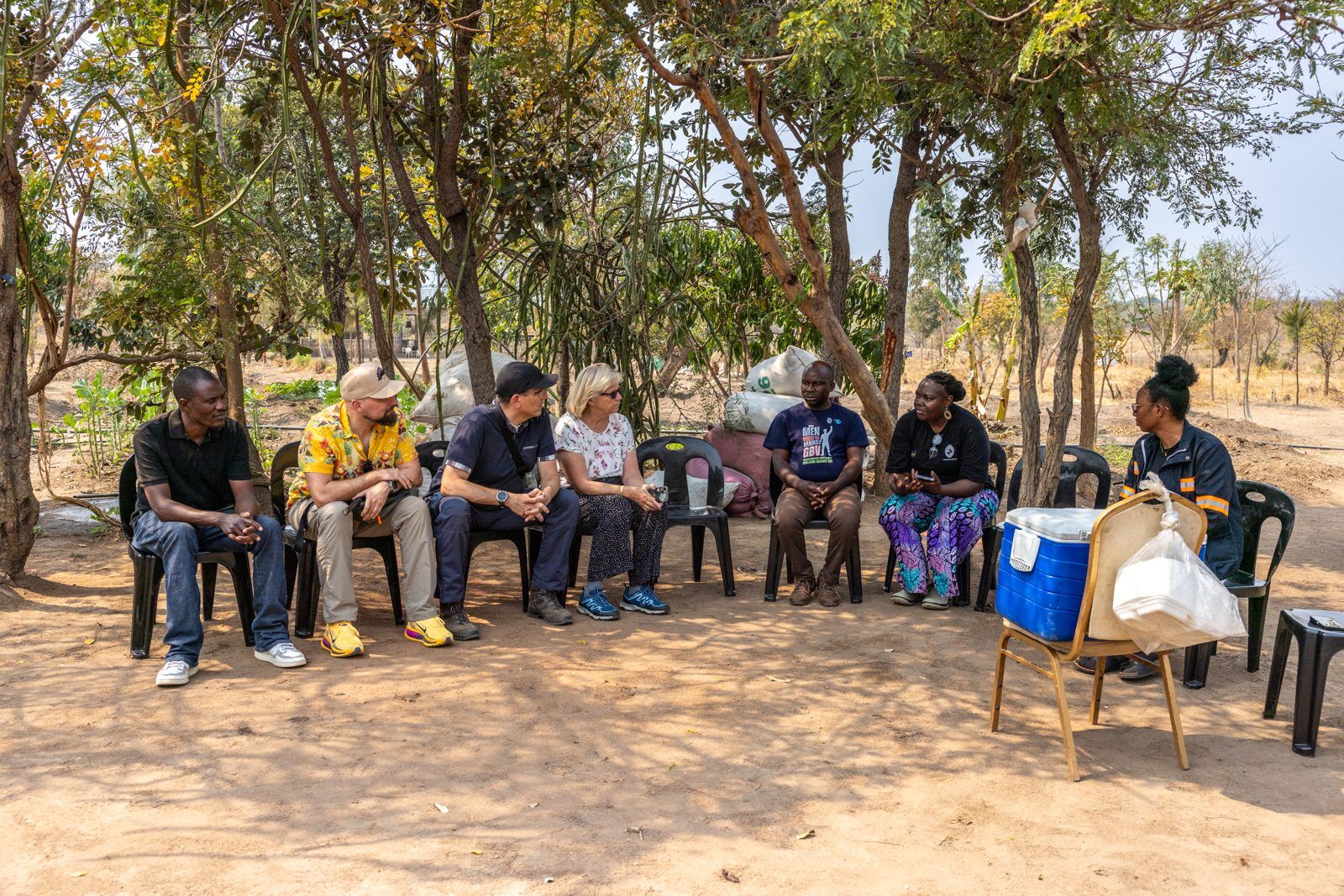
Visiting the site in September 2026
As of June 2026
What comes next
The site is growing into a self-sufficient eco village: a place where sustainable living can be seen and touched, built with what the region itself provides.
- Finish the irrigation system so the fields keep producing in the dry season
- Build an eco training shelter from local materials
- Run further training in permaculture and agroecology
- Consolidate the self-help groups and support them on their way to becoming a cooperative
- In December, at the start of the rainy season, the 12,000 seedlings go to the trained families, who plant them on their own fields. KTF keeps some of them for windbreaks, small woodlots and a seed bank on the demonstration site.
- 100 banana plants go into the ground with the first rains in November
- Training on self-help groups in Kasaka and permaculture courses for farmer groups and primary schools
- Practical workshops on briquettes from crop residues, biochar and mineral salt licks
- Solar-powered drip irrigation for the demonstration fields as soon as funds allow
In the first project phase, KTF aims to plant a total of 75,000 trees, and the first 12,000 are just the beginning.
This project is funded by the Deutsche Postcode Lotterie and the Stiftung «Wald schafft Zukunft».